Blueprint identity
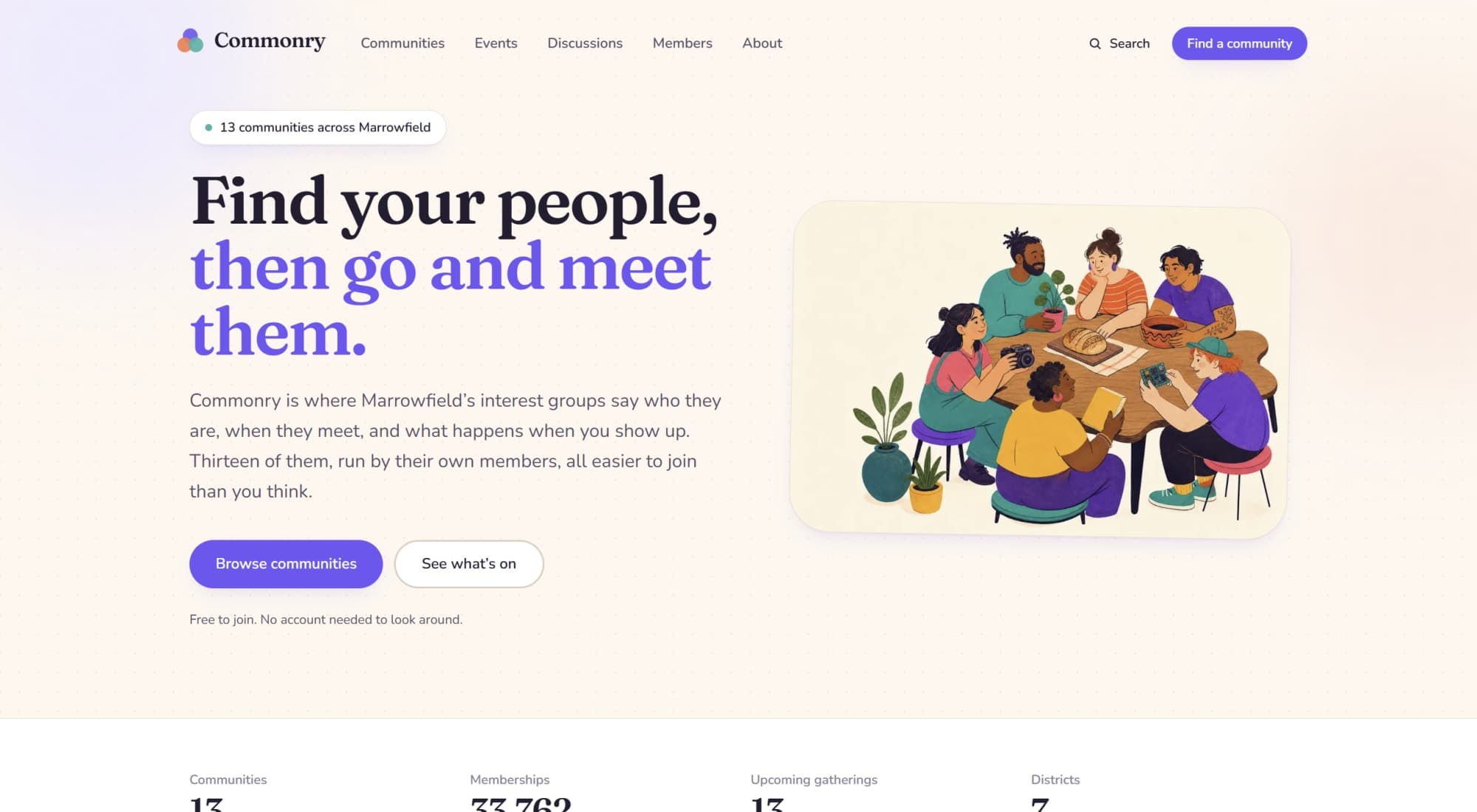
The Commonry Community Playful Blueprint (HZ-BP-018) provides a production-quality reference architecture for member-run community discovery. Commonry and the Marrowfield community are entirely fictional; this implementation serves as a technical foundation for community platforms without requiring backend persistence, authentication, or live APIs.
Executive summary
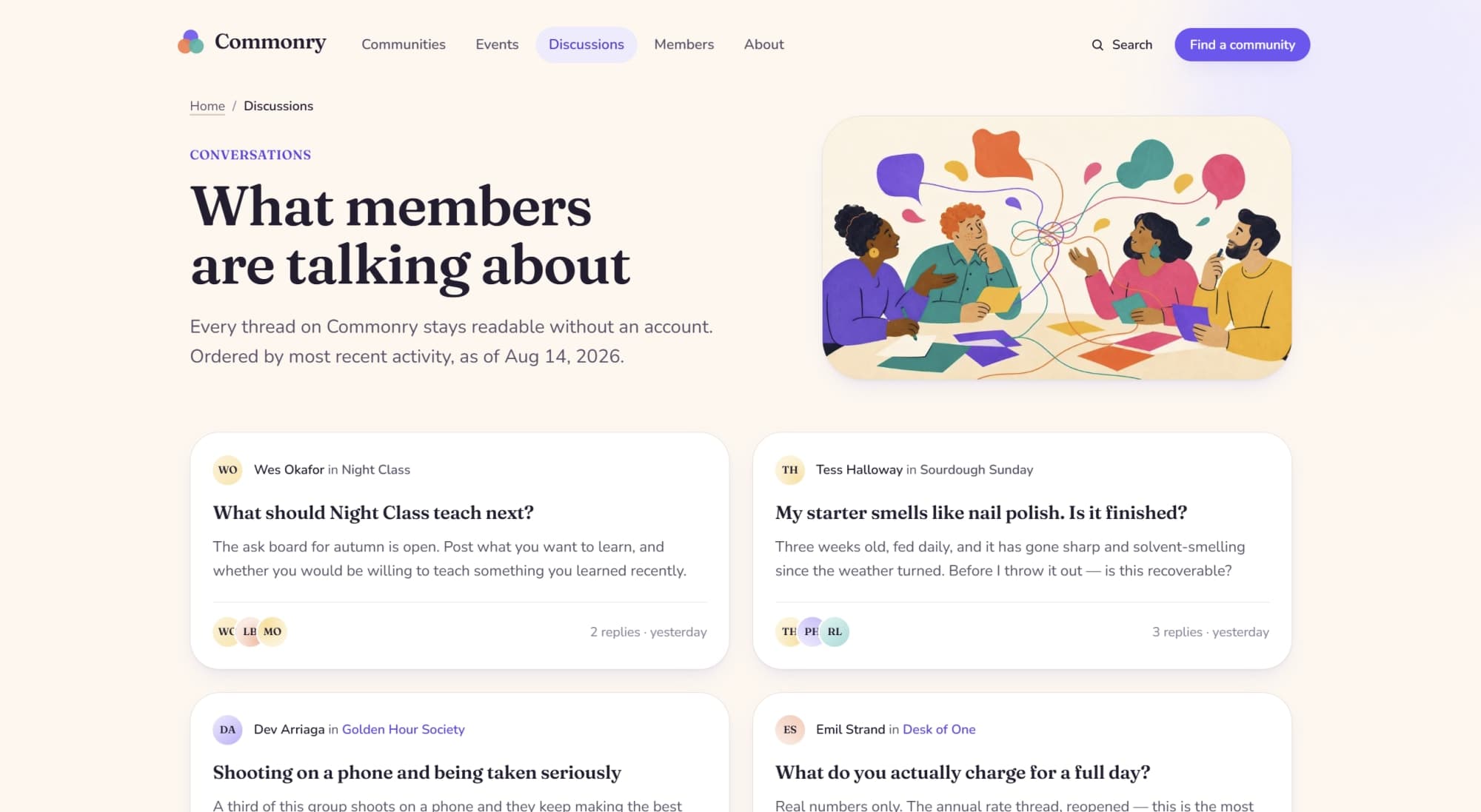
The blueprint solves recurring engineering challenges in community products: modeling complex relationships between members, events, and discussions, and generating indexable, performant detail routes from static data. It demonstrates how to build a rich, interactive experience—including RSVP and join actions—without backend services, by using honest demonstration states rather than faking persistence.
Technical architecture
Built with Next.js 16.2.10 and React 19.2.4, the architecture favors Server Components to ensure zero-network-request rendering. Client components are restricted to interaction boundaries such as the SearchExplorer and CommonGround interest matcher.
| Route | Responsibility | Rendering |
|---|---|---|
| / | Discovery overview | Static |
| /communities/[slug] | Community detail | SSG |
| /search | Client-side directory search | Static, noindex |
Rendering and hydration stability
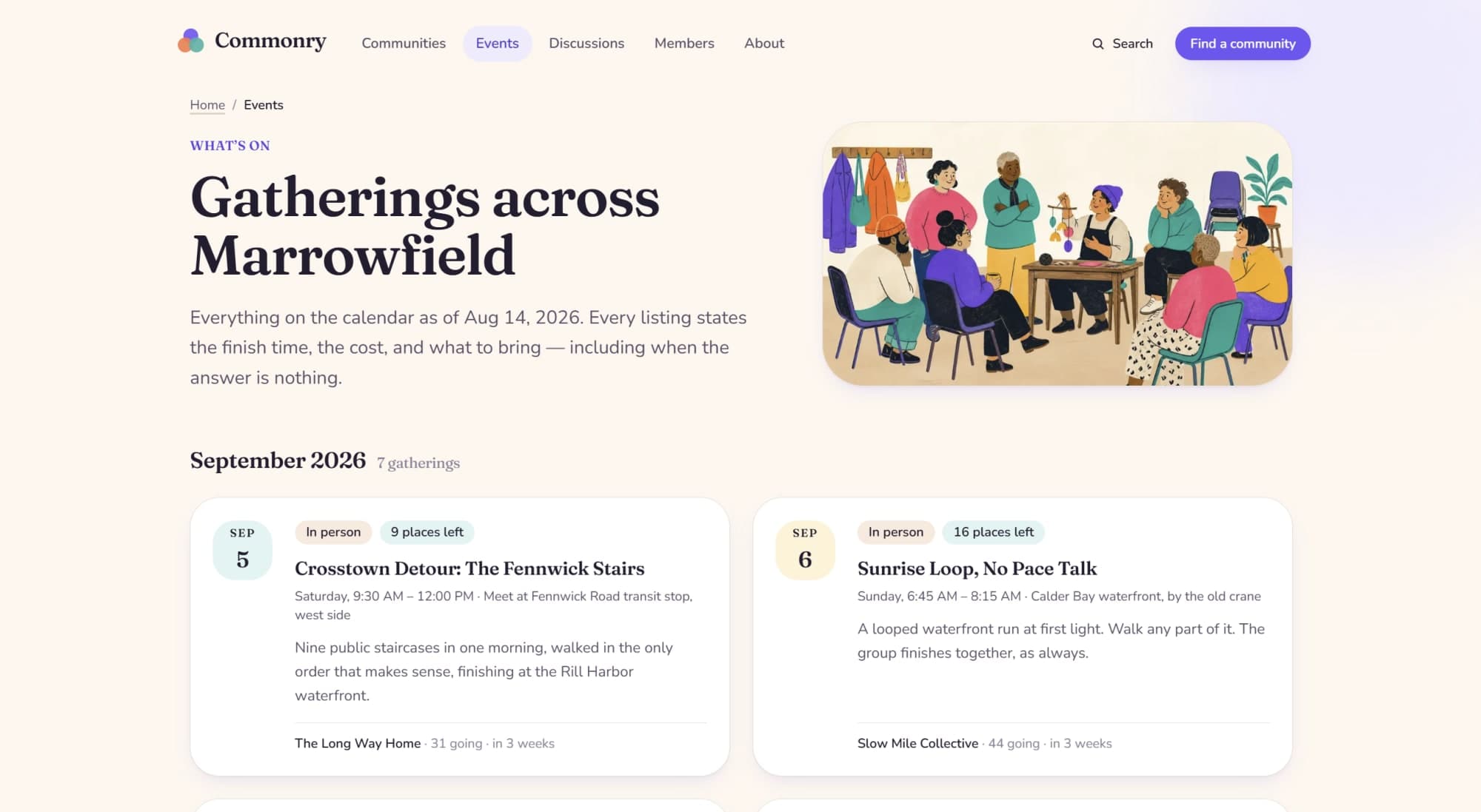
To ensure deterministic builds, the implementation uses a fixed directory snapshot (2026-08-14). Relative dates and event timestamps are calculated arithmetically from this snapshot, avoiding environment-dependent timezone logic. Seeded visual variants use string hashes instead of randomness, preventing hydration mismatches.
Data model
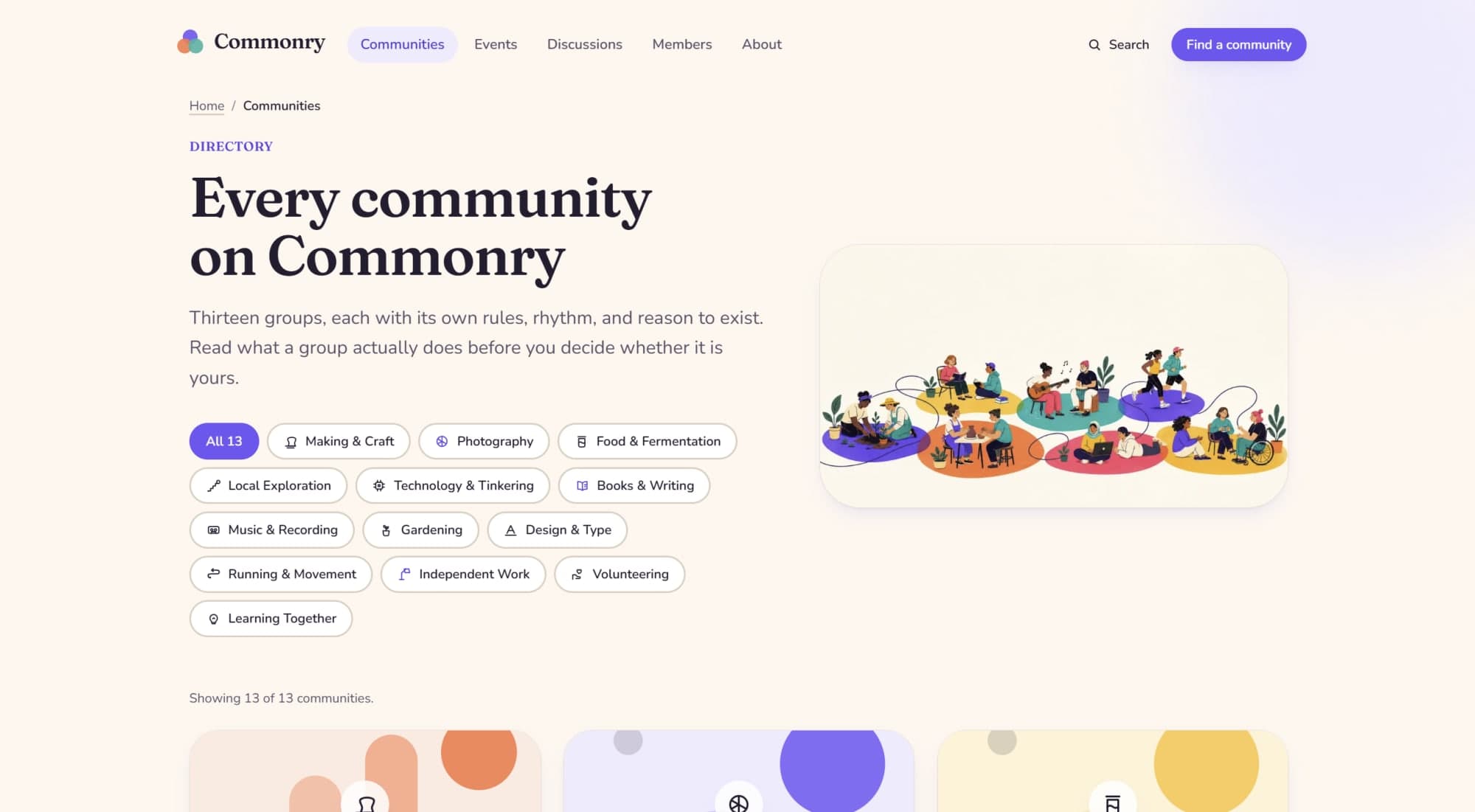
Content is managed as typed TypeScript arrays in src/content/. The read model layer, src/content/index.ts, provides constant-time lookups and relationship selectors. The require* helpers throw during build if a record reference is broken, ensuring strict content integrity.
Design system
The playful design language uses Fraunces for display and Nunito for utility. Tailwind CSS 4 manages the layout, with semantic accents (Grape, Tangerine, Lagoon, Sunbeam, Blush) passed via CSS variables to ensure high-contrast accessibility across all components.
Lessons learned
- Deterministic snapshots are superior to real-time clocks for maintainable visual regression testing.
- Separating UI from persistence via 'DemoAction' components allows for rich interaction demonstration without the overhead of a full backend.
- Using CSS custom properties for accent roles avoids component-level branching and simplifies theme overrides.