WorkBuildsBlueprintsLabsAbout
Contact

  1. HubZero
  2. Blueprints
  3. Blueprint-Corporate-Editorial

Blueprint / reusable engineering asset

Blueprint-Corporate-Editorial

A production-grade corporate website reference implementation demonstrating editorial design principles for trust-driven B2B consulting and engineering firms.

  • Open live preview ↗ (opens in a new tab)
  • View repository ↗ (opens in a new tab)
Reference
HZ-BP-001
Version
v1.0.0
Architecture
Corporate
Design language
Editorial
  • TypeScript
  • Next.js
  • Tailwind CSS
  • Product Engineering
  • UI/UX Design

Contributors

  • Rifaque AhmedChief Executive OfficerEngineering Profile →
meridian-hero

System specification / v1.0.0

What is designed to be reused

Information architecture
Corporate
Design language
Editorial
Revision
Version 1.0.0

Included capabilities

  • 15-route architecture
  • Floating themed navigation
  • Configuration-driven branding
  • SEO-ready metadata
  • Backend-less contact form
  • Scroll-triggered reveals

Documentation / implementation reference

Implementation guidance

  1. Blueprint-Corporate-Editorial: A foundation for trust-driven B2B sites
  2. Engineering for separation of concerns
  3. Tradeoffs and limitations

Blueprint-Corporate-Editorial: A foundation for trust-driven B2B sites

The blueprint-corporate-editorial is a production-grade reference implementation for B2B consulting firms. It demonstrates how to apply publication-grade editorial design principles to a corporate information architecture, replacing standard software UI patterns with a visual vocabulary of serif typography, a neutral stone palette, and generous whitespace.
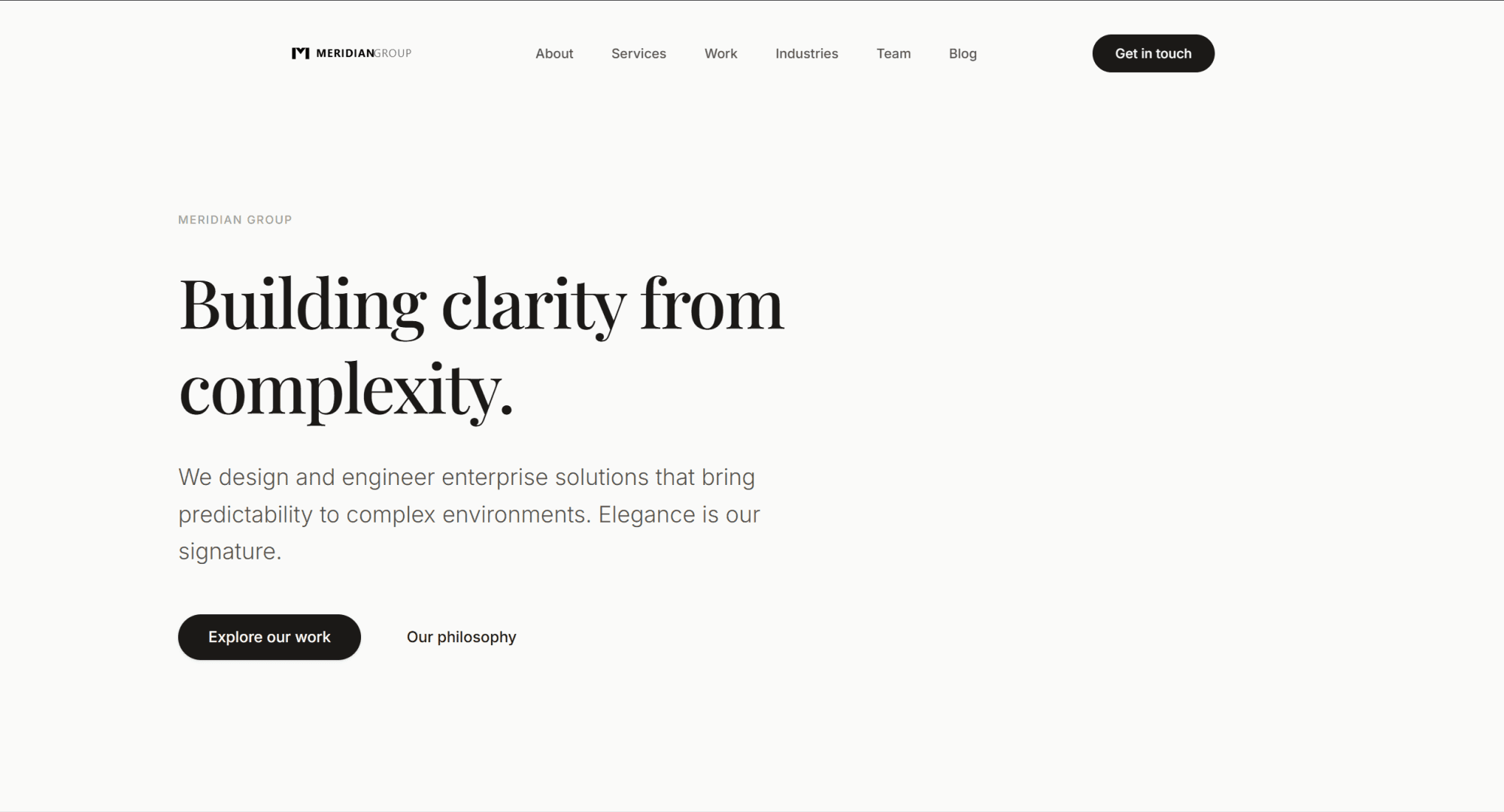
meridian-hero
The homepage hero section establishes the editorial visual language: serif display type and a restrained, monochrome stone palette.

Engineering for separation of concerns

The architecture uses Next.js 16 App Router and Tailwind CSS 4 to keep visual and functional concerns decoupled. By using a two-tier component system—layout primitives for structure and cva-driven UI primitives for content—the blueprint allows for reskinning without modifying internal component logic.

Every page is a React Server Component. Client-side interactivity is strictly scoped to four files: Header, Reveal, ContactForm, and global providers. This approach simplifies the state model, ensuring that the signature floating navigation component derives its state independently from scroll, route, and menu inputs.
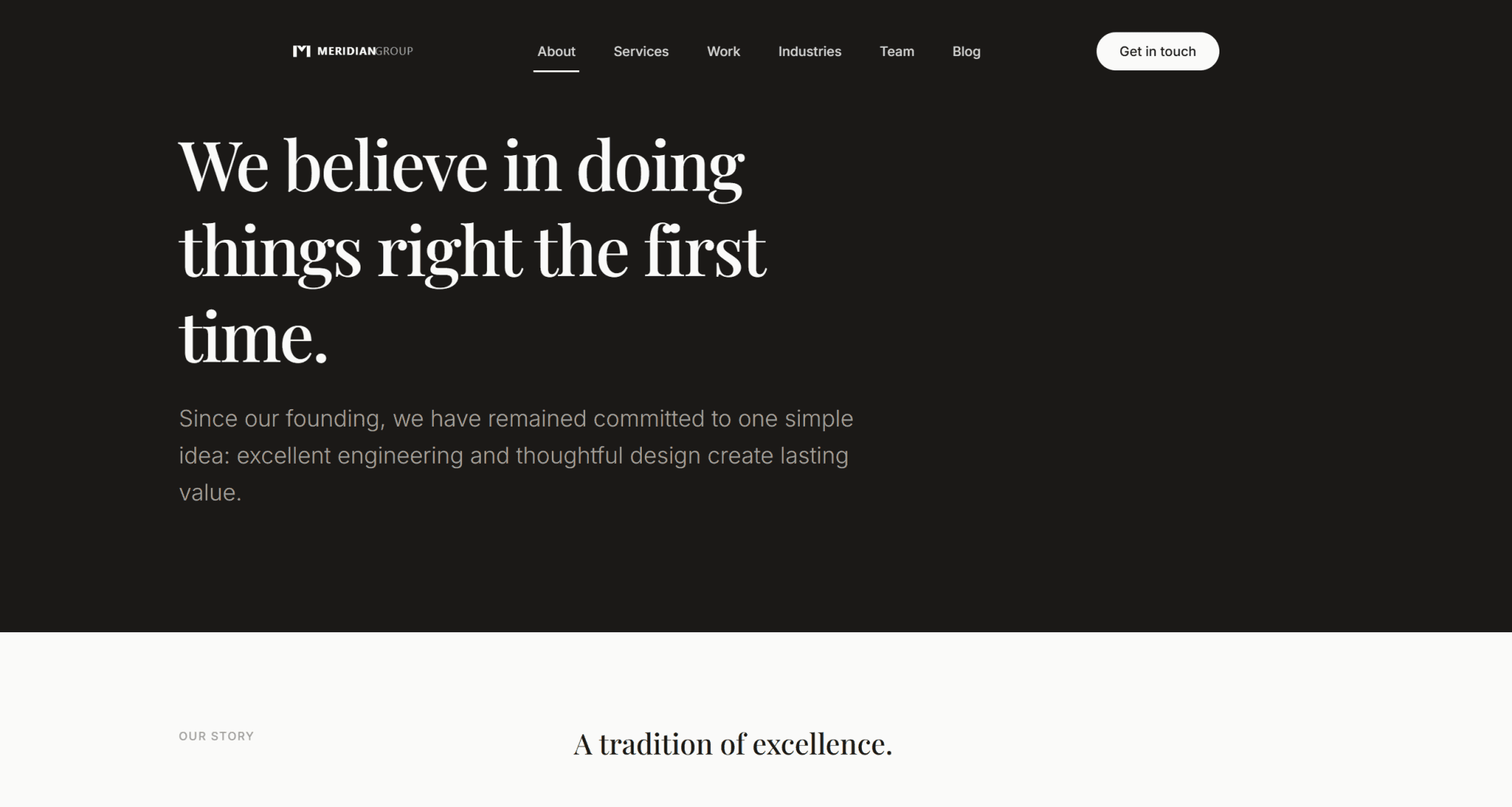
meridian-about
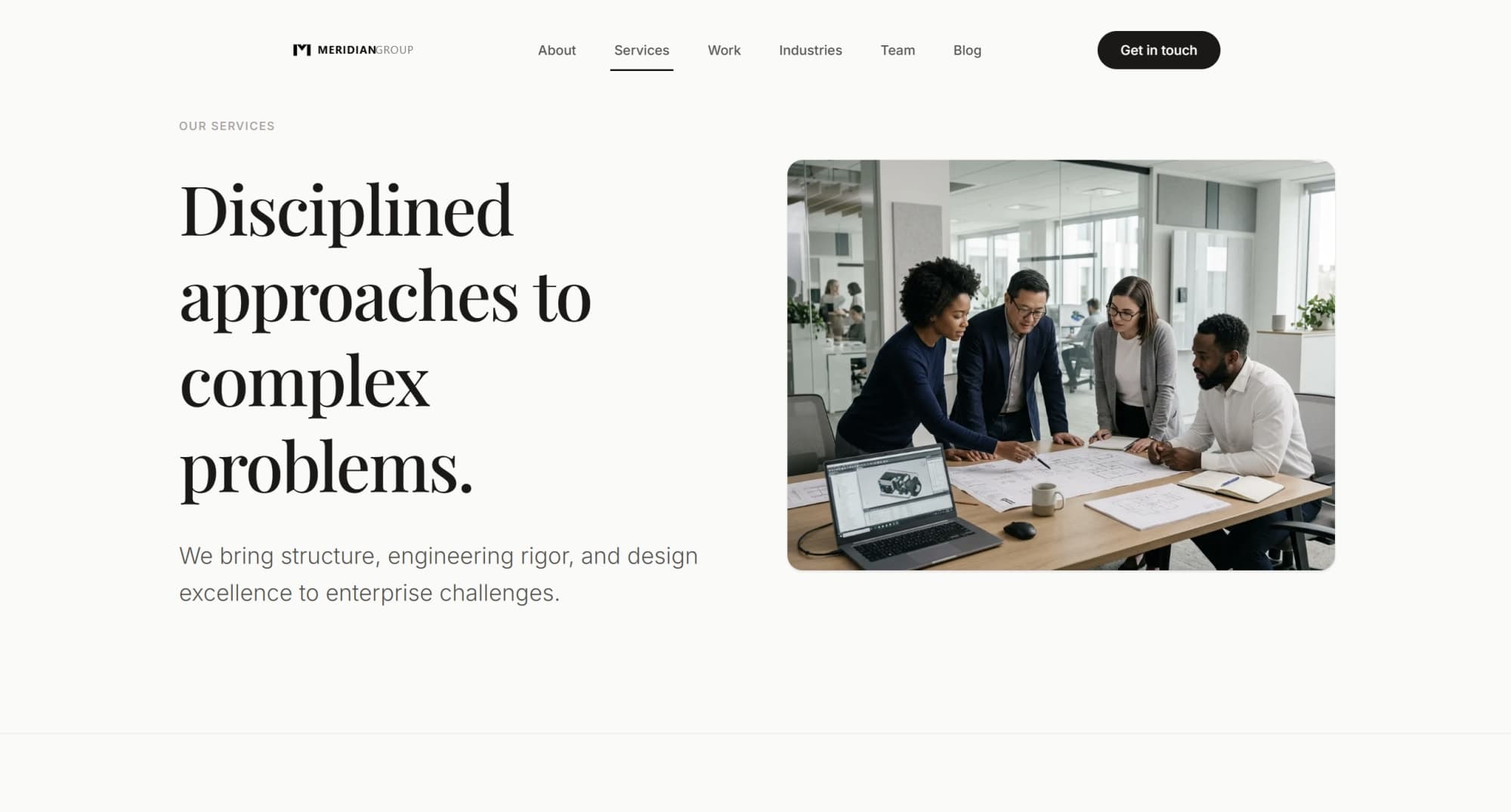
meridian-services
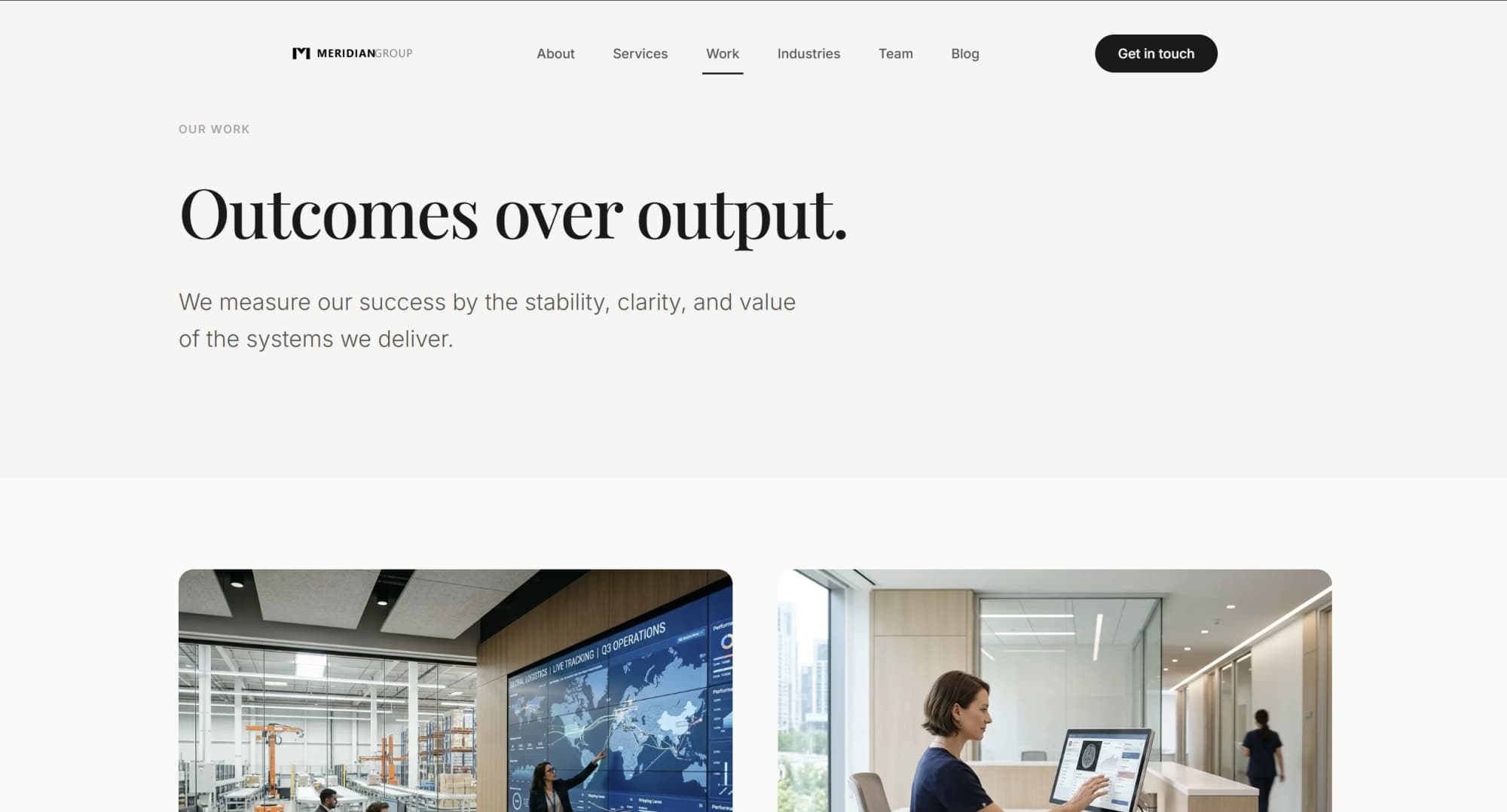
meridian-work

Tradeoffs and limitations

The blueprint prioritizes an honest, backend-less architecture. The contact form does not simulate a database submission; it constructs a mailto URL, ensuring no false expectations of a server-side API are set for the implementer.

Current limitations include the absence of automated sitemap or robots file generation, despite the existence of generator functions in the codebase. Additionally, dynamic route segments synthesize titles from slugs rather than fetching data, a deliberate simplification that requires further development for production content management.

While the design system includes a ThemeProvider, true dark-mode/light-mode switching is not currently implemented. The dark-hero route list is hardcoded, which will require attention as the site grows.

Implementation / recorded views

Preview the system

meridian-hero
meridian-about
meridian-services
meridian-work

Publication record

HZ-BP-001 / 1.0.0

Return to Blueprints →
HubZero

Engineering products, systems, and the public record behind them.

Record

  • Work
  • Builds
  • Blueprints
  • Labs
  • Notes
  • Ledger

Company

  • About
  • Engineering
  • Services
  • Careers
  • Contact

Resources

  • Search

© 2026 HubZero · Privacy

Evidence before claims.