A reference implementation for premium retail
The Premium Ecommerce blueprint provides a production-ready foundation for brands selling apparel, jewelry, and home goods. It demonstrates how to build a high-fidelity storefront that prioritizes material honesty and craftsmanship, using a configuration-driven architecture that separates content from code.

Architecture and design philosophy
The blueprint is built on Next.js 16 and Tailwind CSS v4, utilizing a fully typed, server-first route tree. By isolating interactivity into narrow client components, the majority of the application remains server-rendered, ensuring performance and SEO reliability.
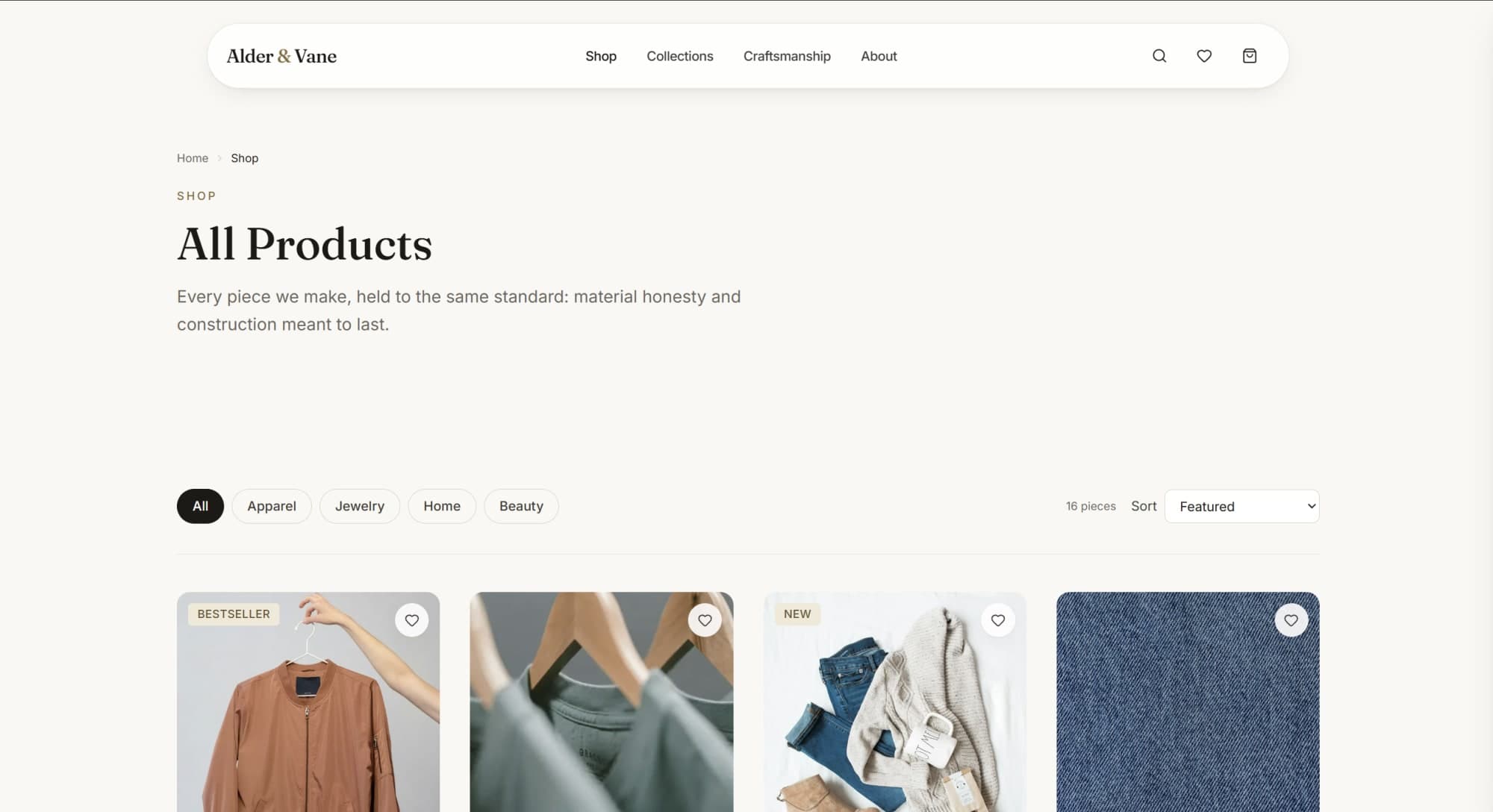
The design system relies on a token-driven approach using CSS variables defined in the @theme layer. This ensures that typography, spacing, and color palettes are consistent across the entire application. Rebranding is achieved by editing configuration files in src/config/ and src/data/ rather than modifying component source code.
Engineering decisions
- Honest demonstration: The cart and checkout flows operate entirely client-side without a backend. This avoids simulating non-existent functionality and makes the system's limitations explicit.
- Two-phase hydration: Cart and wishlist providers use an isHydrated flag to prevent UI flashes, ensuring client-side state correctly mirrors server-rendered initial state.
- Independent state: Interface elements like the navigation bar and drawers derive state from independent hooks, avoiding the common bug class of chained state dependencies.
- Photography indirection: A semantic mapping layer maps keys to assets, preventing raw image URLs from being hardcoded in content modules.
Accessibility and SEO
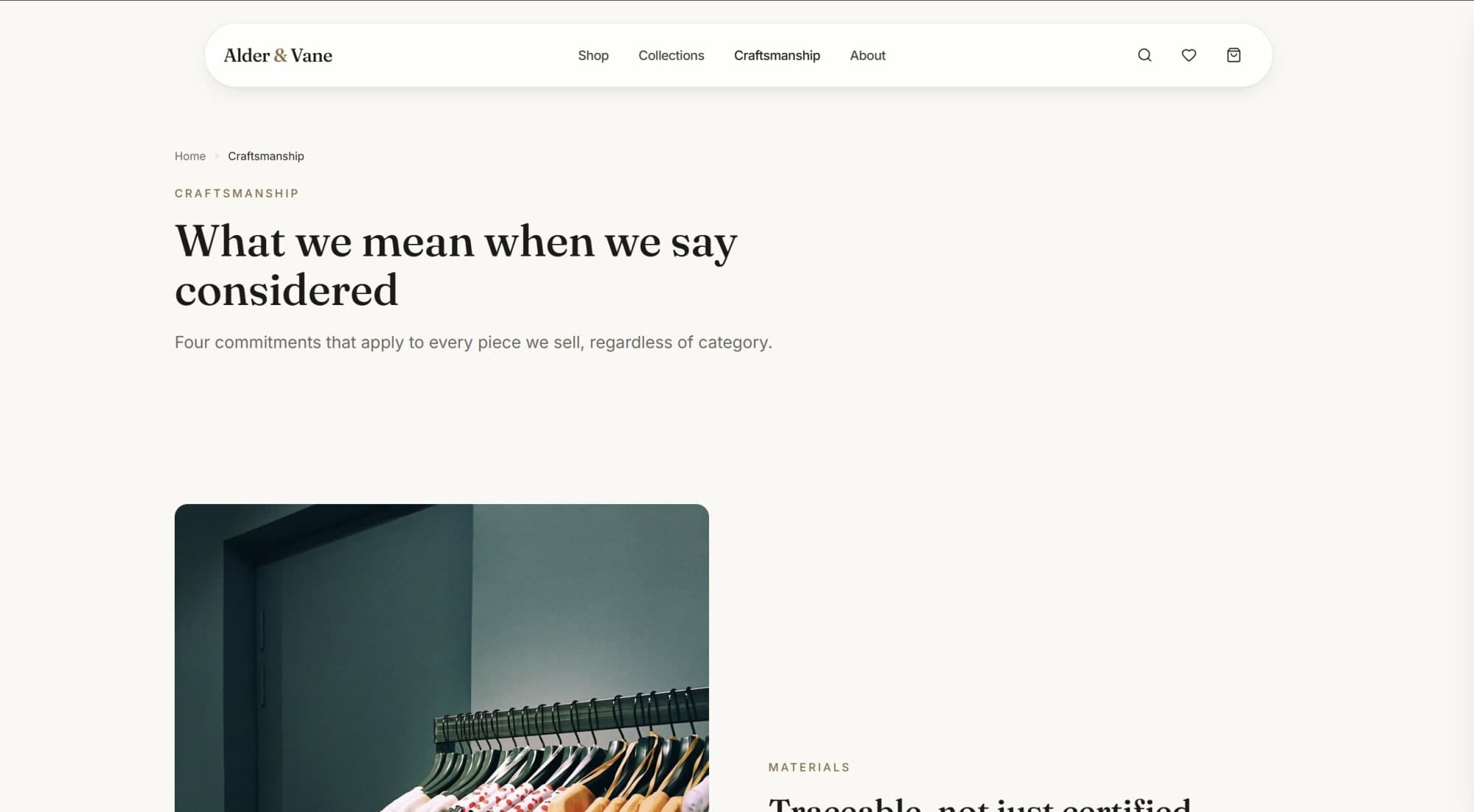
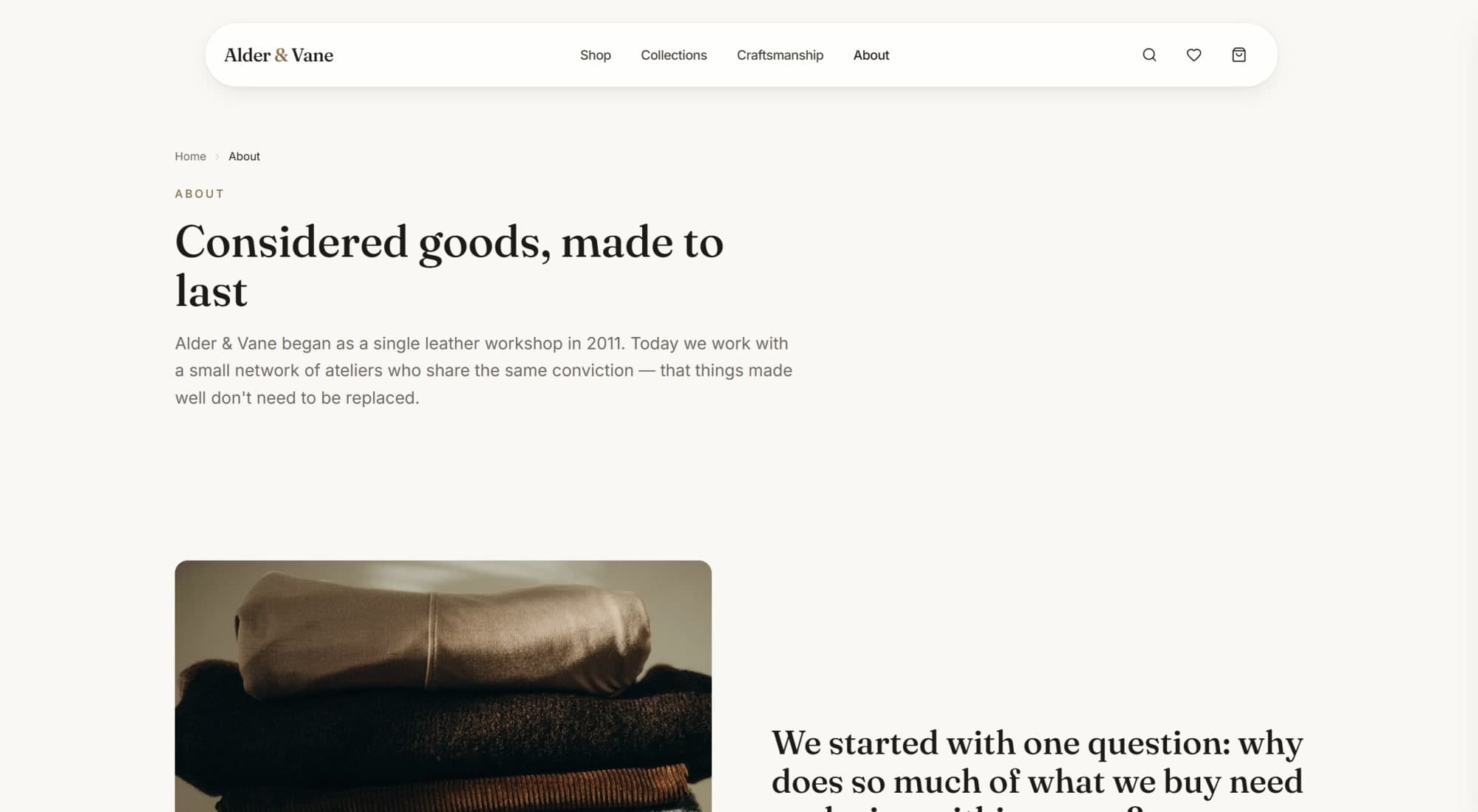
Accessibility is treated as a core implementation requirement. This includes explicit handling of framework routes like error and loading states, dynamic aria-labels for icon-only controls, and consistent use of semantic HTML. SEO infrastructure is provided by a centralized metadata factory, ensuring consistent OpenGraph and JSON-LD implementation across all pages.