Project overview
The Astera Health Healthcare + Minimal Blueprint is a production-ready, canonical HubZero reference implementation. It provides a structured foundation for building multi-location healthcare websites that require robust information architecture, clinician and clinic discovery, and patient education, without coupling the frontend to specific backend vendors.
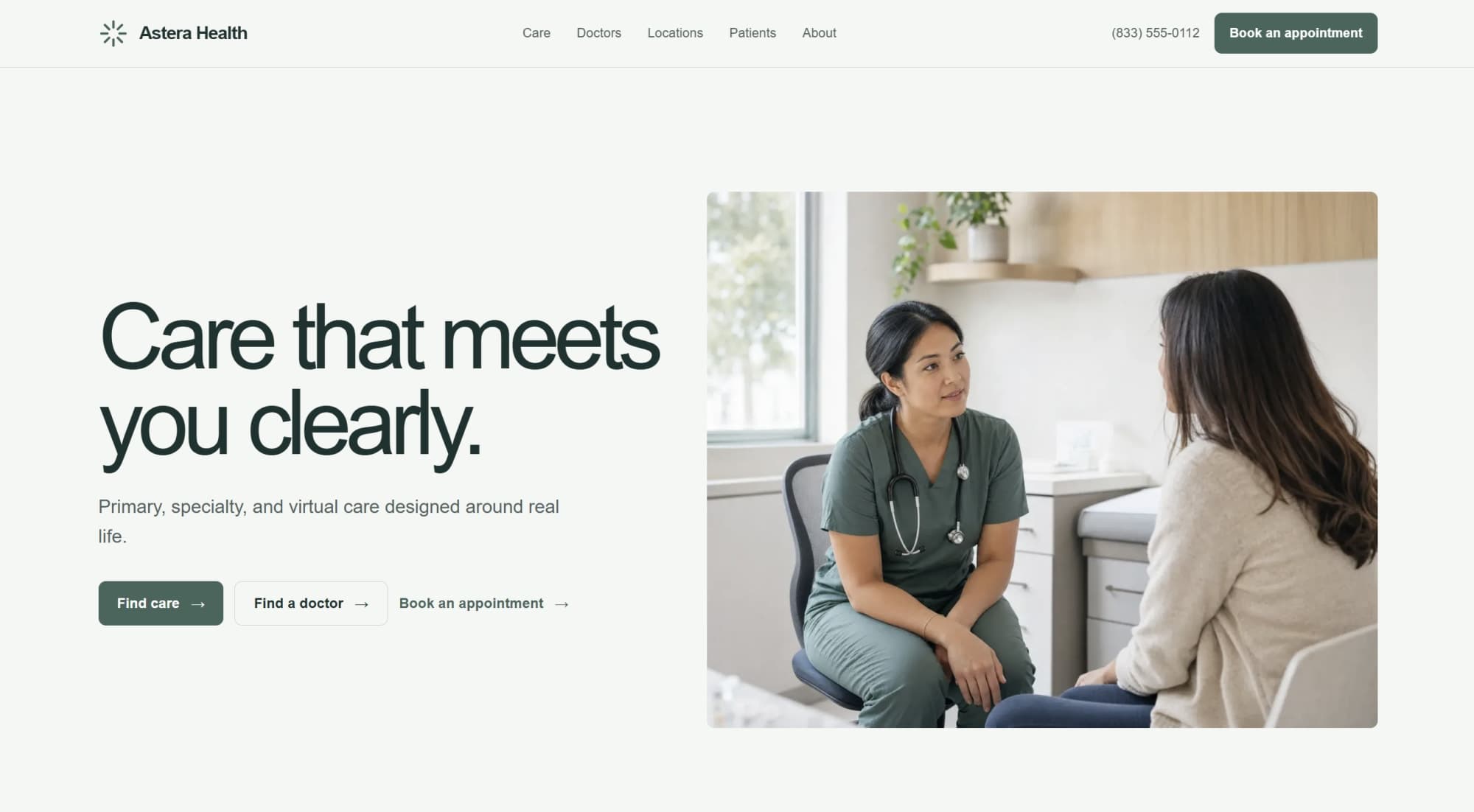
Goals and motivation
Healthcare websites frequently suffer from fragmented user journeys and over-engineered client applications. This blueprint addresses these issues by enforcing a server-first rendering model and a content-centric information architecture.
- Present complex care choices as intuitive patient journeys.
- Connect services, clinicians, and locations without relying on disconnected card galleries.
- Maintain a calm, Minimal design language across a broad editorial vocabulary.
- Ensure high performance and accessibility without large client-side dependencies.
Technical architecture
The blueprint uses Next.js 16.2.12, React 19.2.4, TypeScript, and Tailwind CSS 4. It relies on React Server Components for the majority of content rendering, limiting client-side JavaScript to necessary interaction islands like mobile navigation and viewport-based reveal animations.
Data model and flow
Configuration is centralized in `src/config/content.ts`. By using simple, typed arrays for services, clinicians, and locations, the blueprint remains data-source agnostic. This structure allows teams to swap local configuration for CMS-driven APIs without refactoring the route or component architecture.
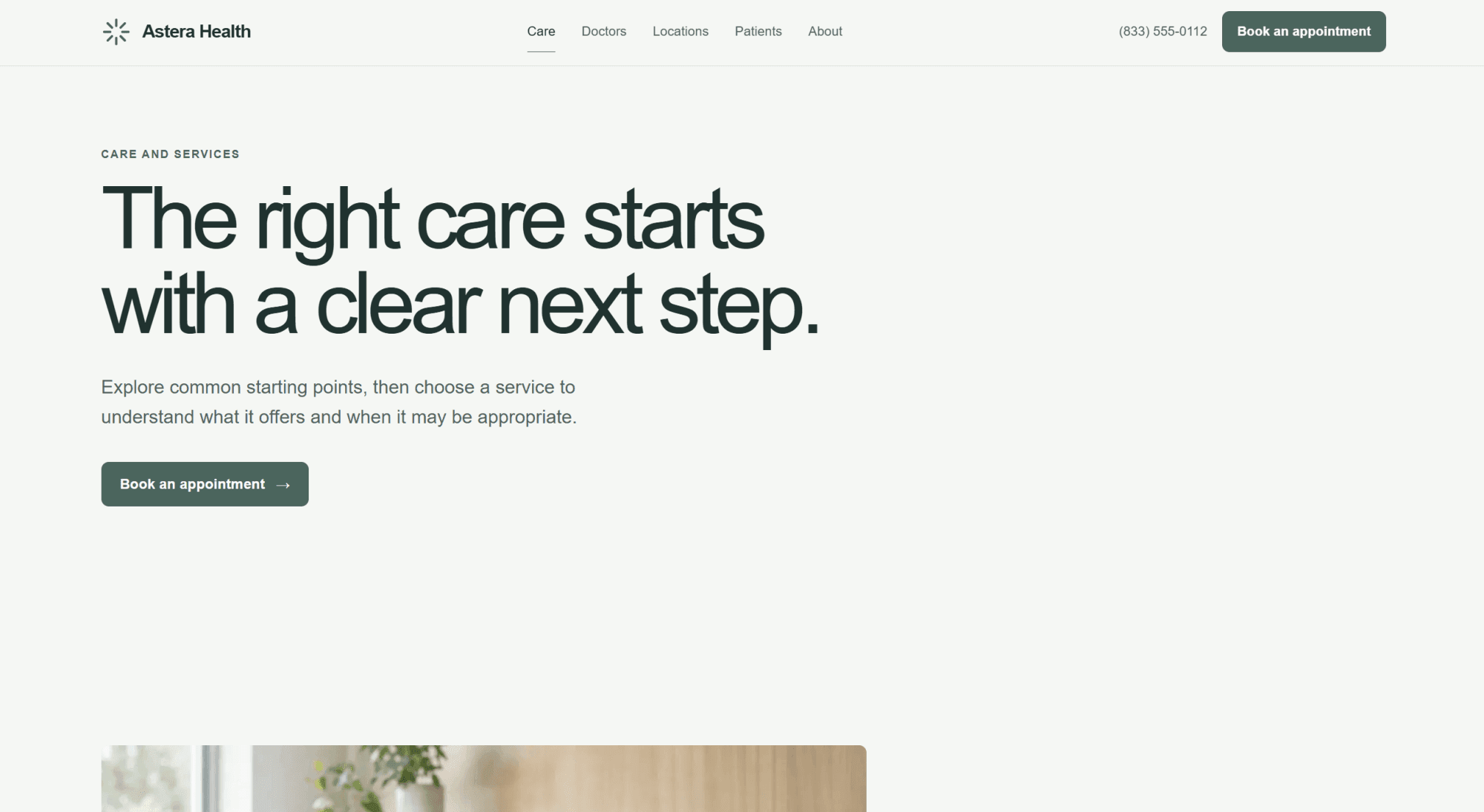
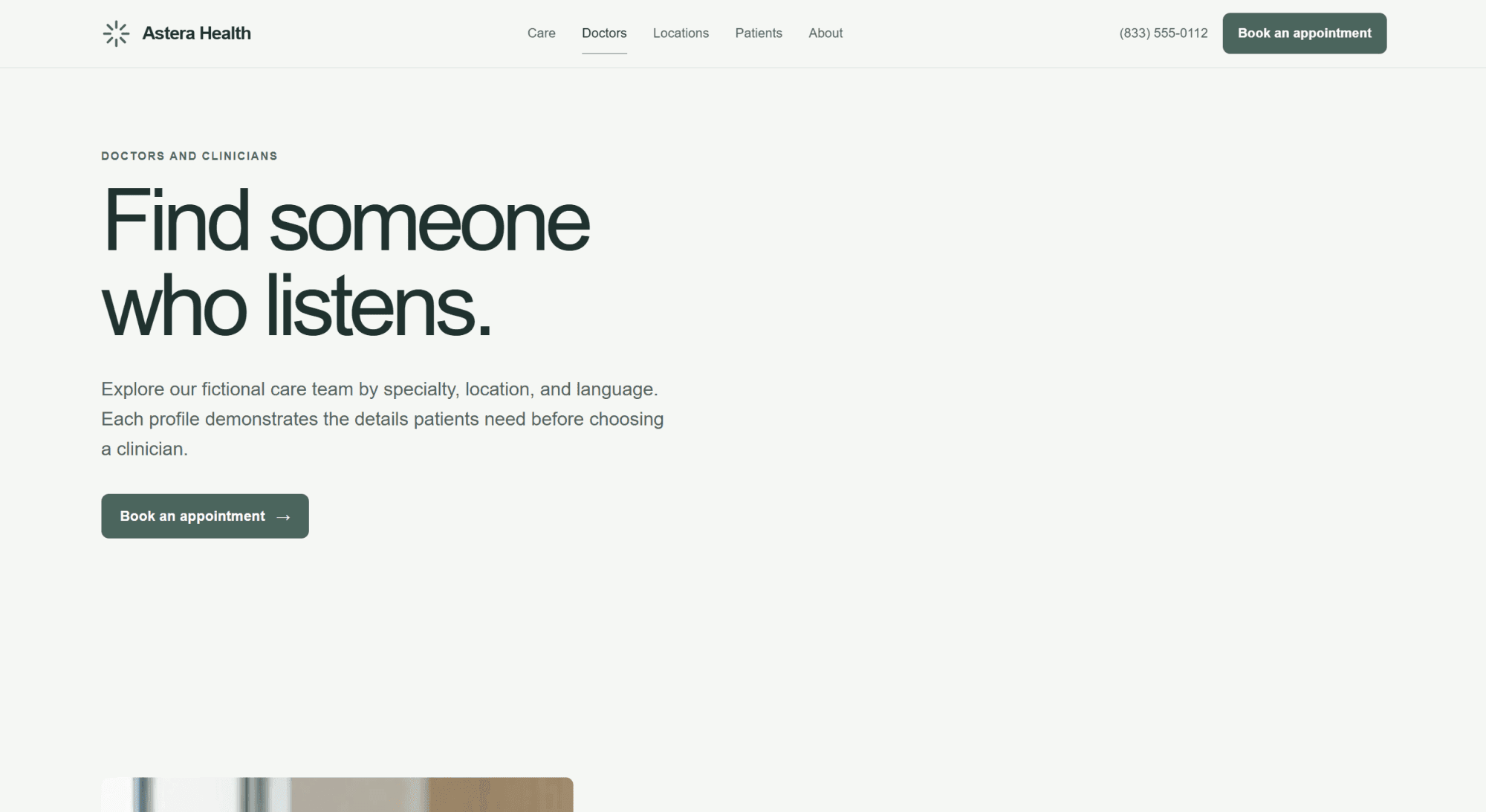
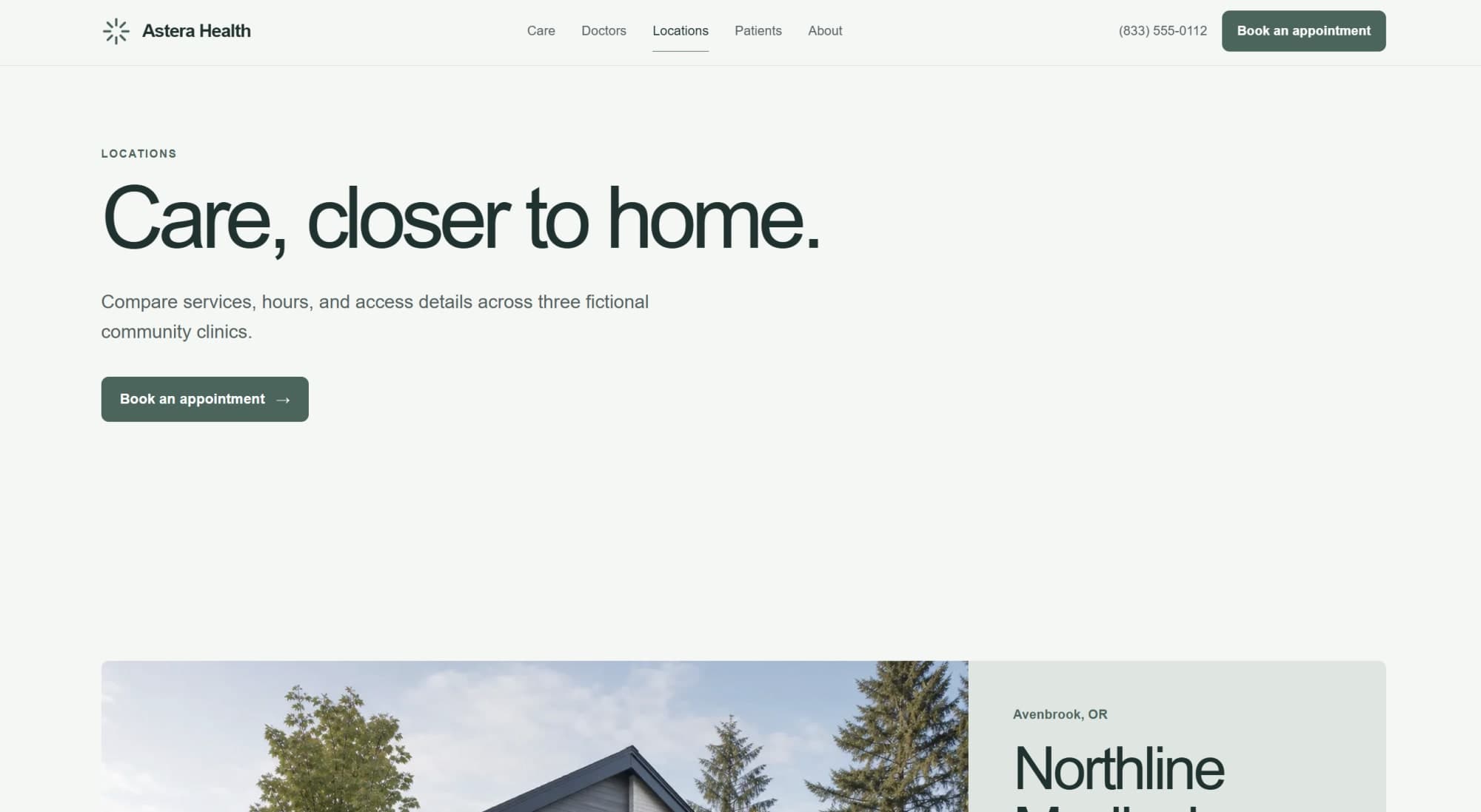
Design system and layout
The Minimal design language prioritizes typography and whitespace over decorative elements. A single 8-pixel radius is applied to containers, while depth is achieved through tonal shifts rather than elevation or shadows. The typography uses a native font stack to eliminate blocking web font requests.
Engineering trade-offs
The decision to favor static generation and server-side rendering significantly reduces bundle sizes and improves SEO. However, this approach shifts the burden of state management to the server. For dynamic features like appointment booking, the blueprint intentionally avoids faking transactions, instead providing clear, informational paths that link to external systems.
Accessibility and performance
The blueprint targets WCAG 2.2 Level AA compliance. Accessibility features include semantic HTML structure, reduced-motion preferences, and explicit focus states. Performance is optimized by minimizing client-side dependencies and leveraging native browser capabilities for rendering and layout.