Manufacturing architecture and the evidence-driven journey
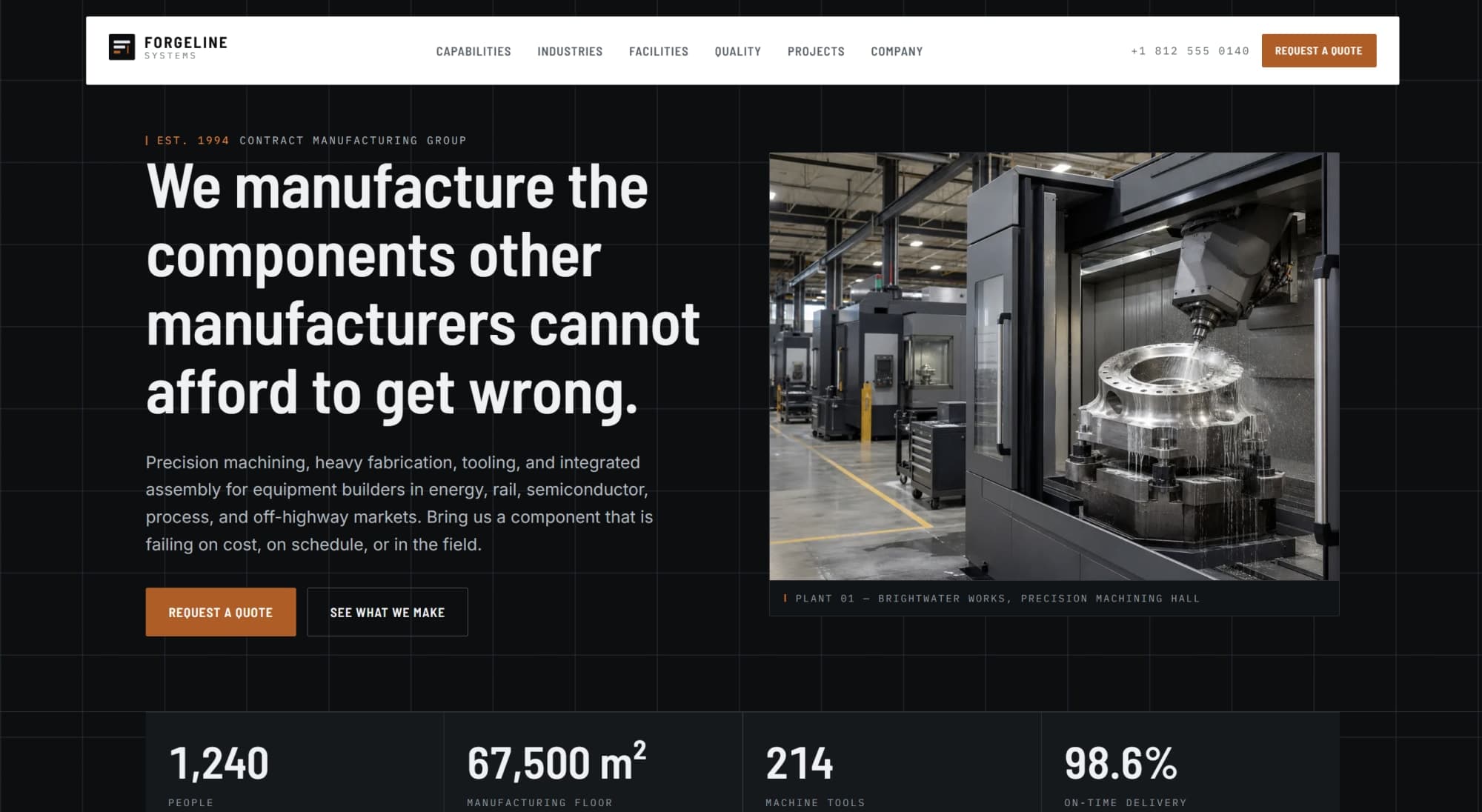
Manufacturing websites often fall into generic corporate patterns that fail to address the specific due-diligence requirements of B2B buyers. The HubZero Manufacturing + Industrial Blueprint replaces this with an evidence-driven hierarchy, guiding visitors through a sequence of increasing technical rigor: from company proposition and scale, through specific capabilities and sector expertise, to operational facilities and quality assurance, culminating in a request-for-quotation path.
Configuration-driven content architecture
To maintain a clean separation between narrative assembly and data, the blueprint uses a typed, configuration-driven content system. Domain records—capabilities, industries, facilities, projects, and quality data—are stored locally as TypeScript records. This approach eliminates the need for an external CMS or database for a fixed reference implementation while ensuring type safety and internal link integrity.
Detail routes use `generateStaticParams` to build pages at compile time. Metadata, JSON-LD, and sitemap entries are generated directly from the underlying content record, preventing drift between the visible page content and its search-engine representation.
Industrial design system and surface tokens
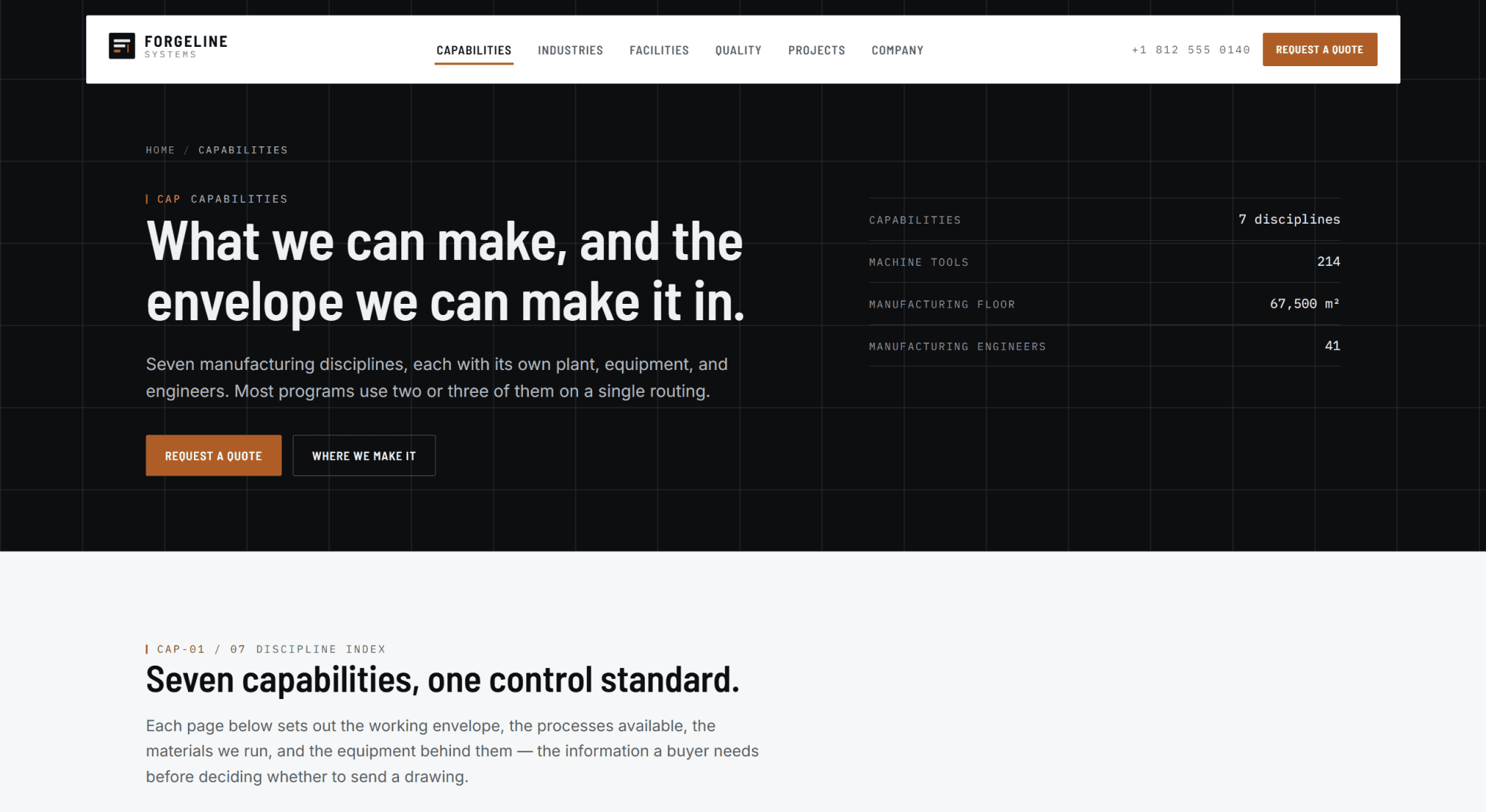
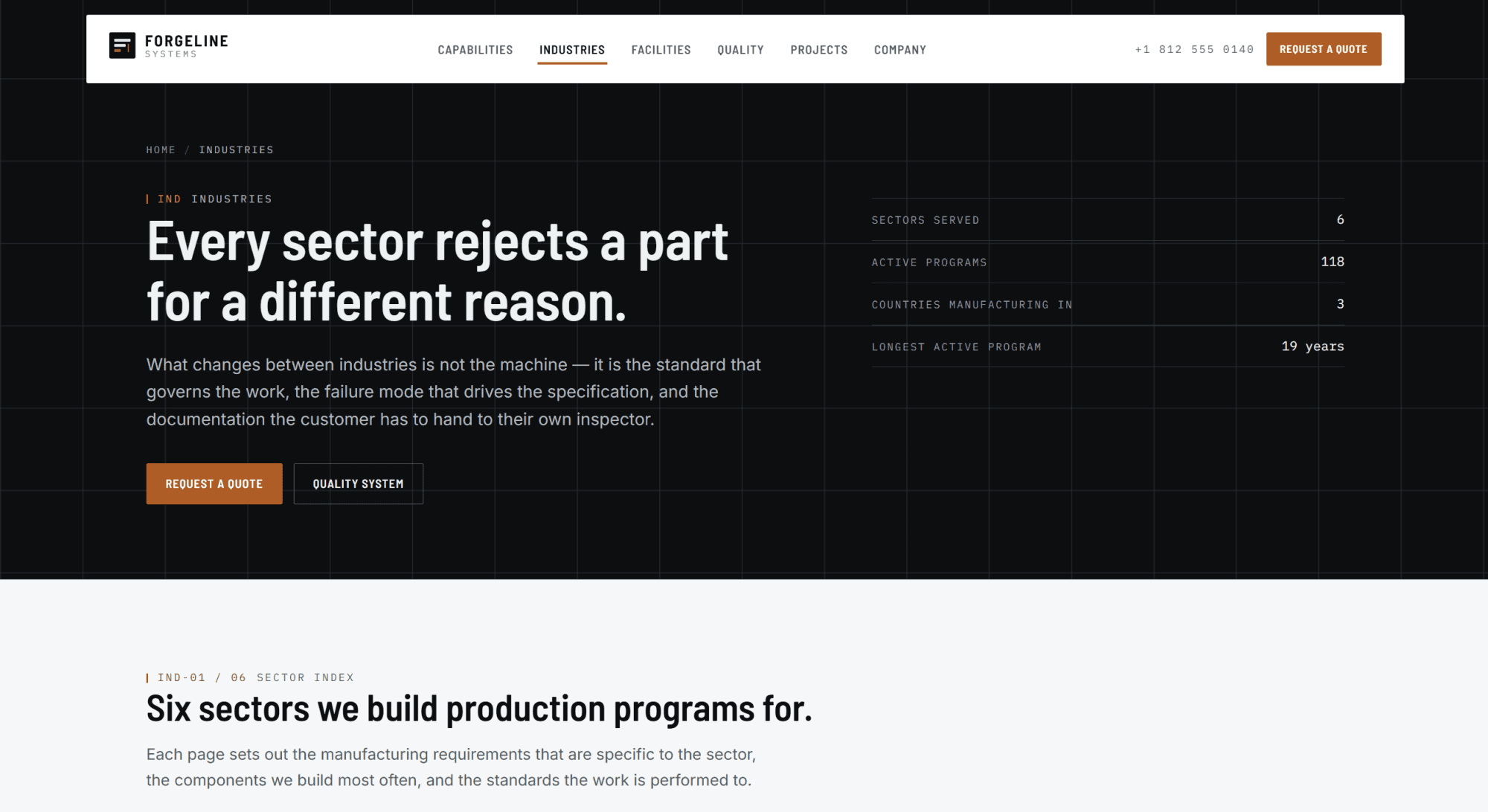
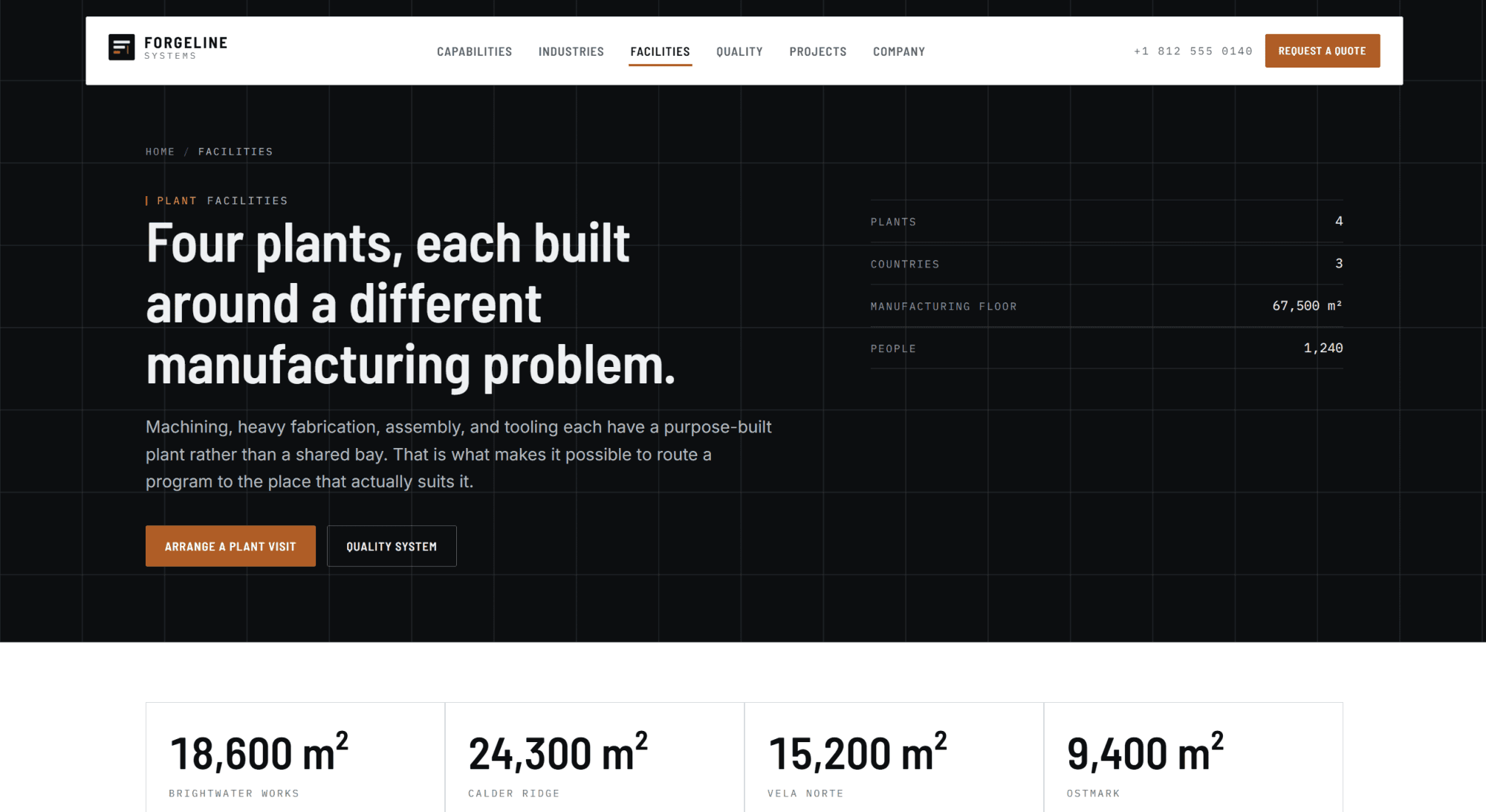
The Industrial design language uses a semantic surface-token system to manage material zones (light, sunken, and dark) without passing theme props through the React component tree. By using CSS custom properties remapped at the container level—specifically through `data-surface` attributes—components automatically adapt to their context. This avoids complex conditional logic and keeps the underlying UI primitives focused on structure.
The visual language prioritizes technical clarity through structural borders, machined radii, and restrained motion. Photography and deterministic SVG technical plates are managed via a unified `Figure` abstraction, ensuring that responsive art direction, loading behavior, and accessibility are handled consistently across the entire site.
Engineering review and reusable patterns
- IntersectionObserver-based production route: Provides a mechanical, informational scroll experience that emphasizes process stages without hiding content.
- RFQ mail-client handoff: Offers a predictable, honest conversion path that avoids the complexity and security overhead of an application backend for content-led sites.
- Surface-aware design system: Enables complex material-zone nesting without component-specific theme conditionals.
- Unified Figure abstraction: Decouples image rendering from content, ensuring consistent accessibility and responsive handling for both photography and technical drawings.