Veyra: A media-first editorial blueprint
Veyra is a canonical HubZero reference implementation for the Media architecture and Expressive design language. It demonstrates how to build a performant, maintainable editorial publication that treats content discovery as a curated journey rather than a chronological feed.
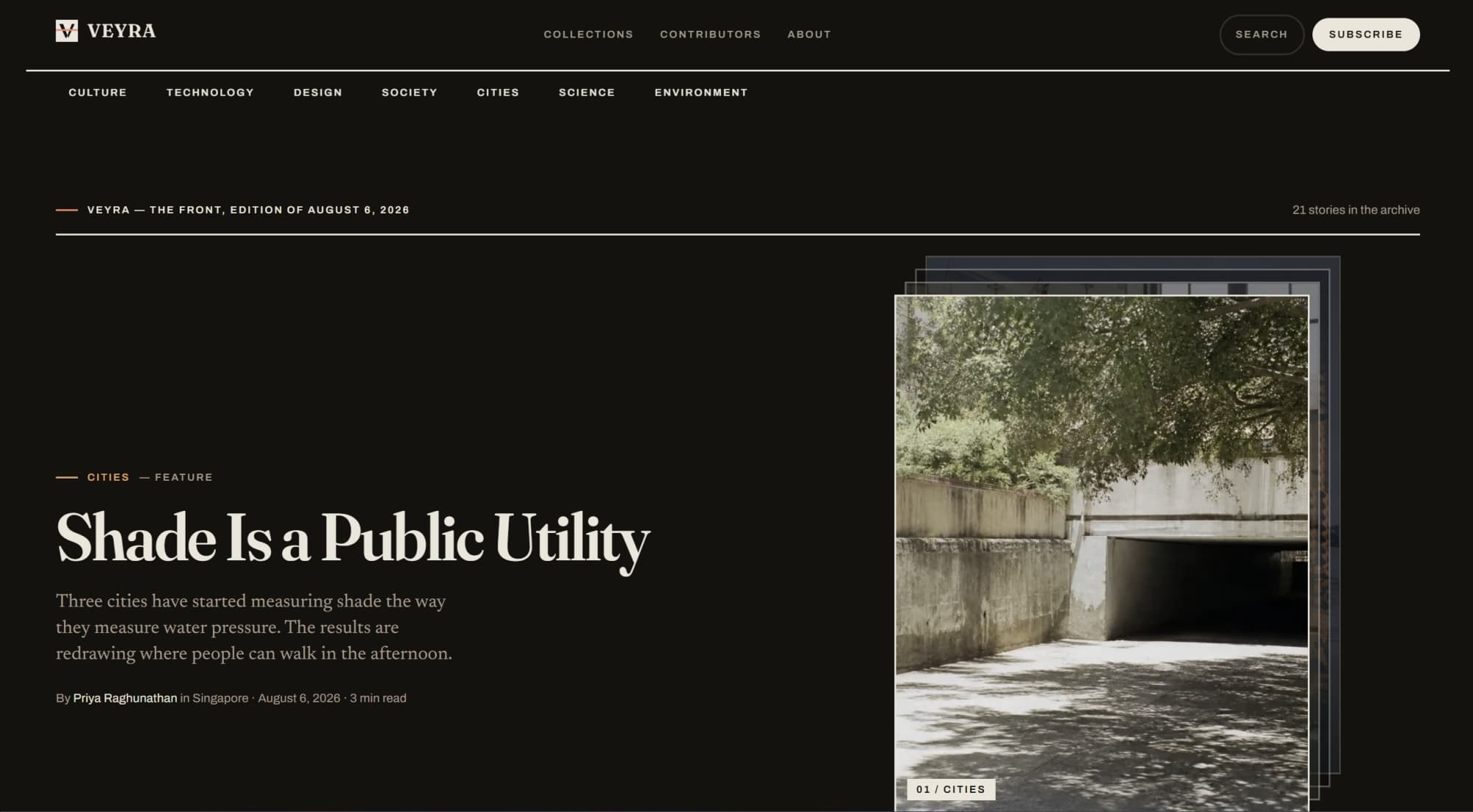
Architectural strategy
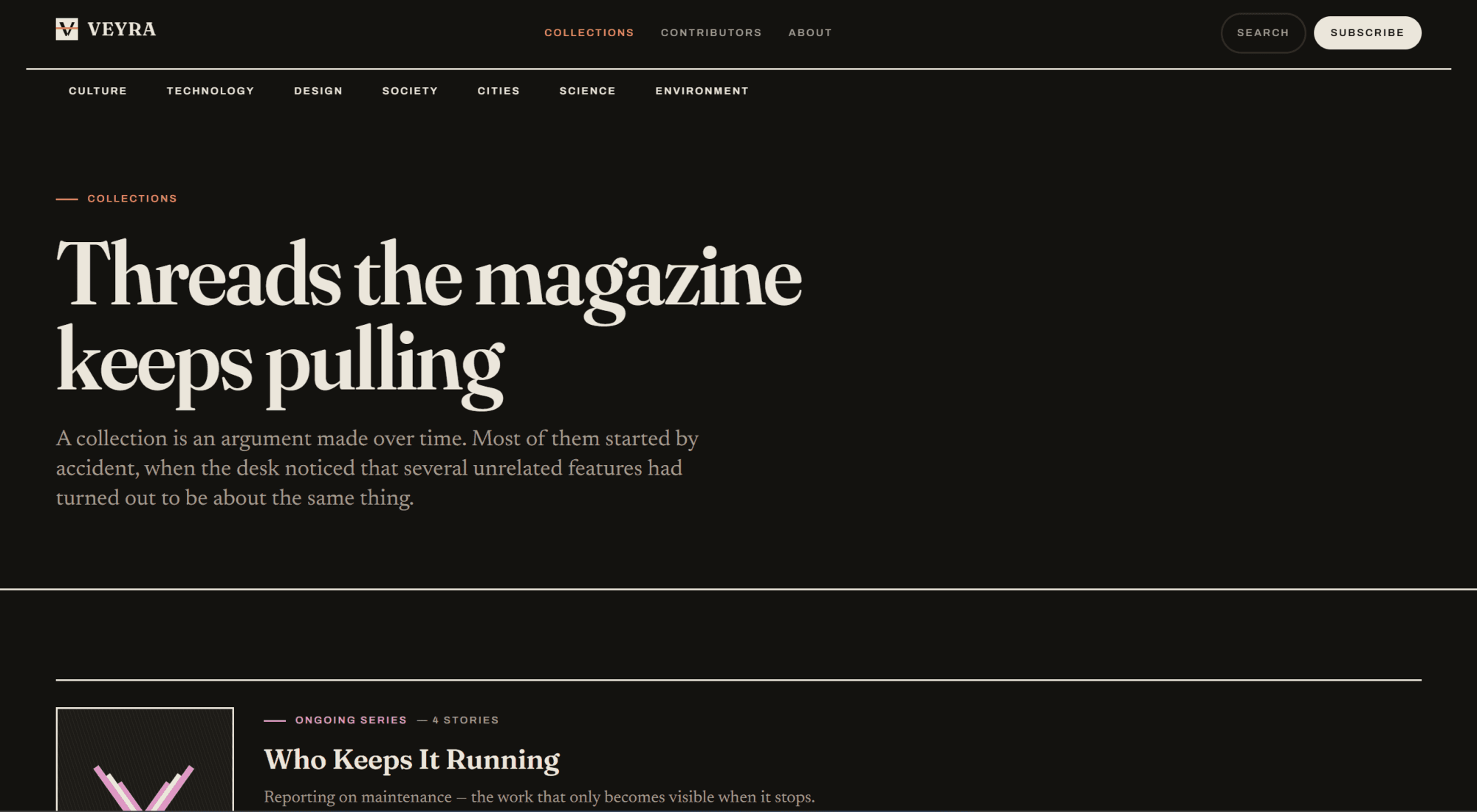
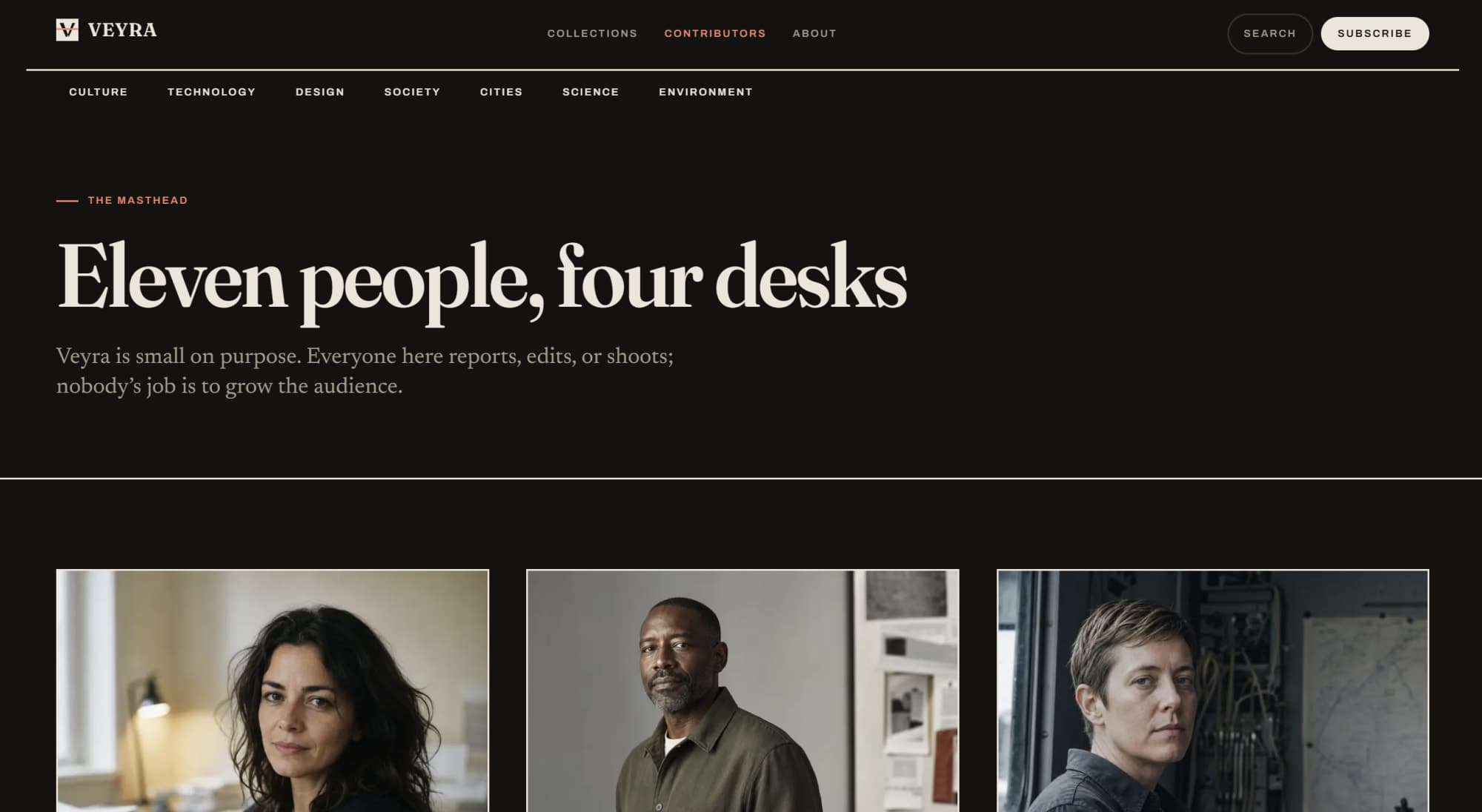
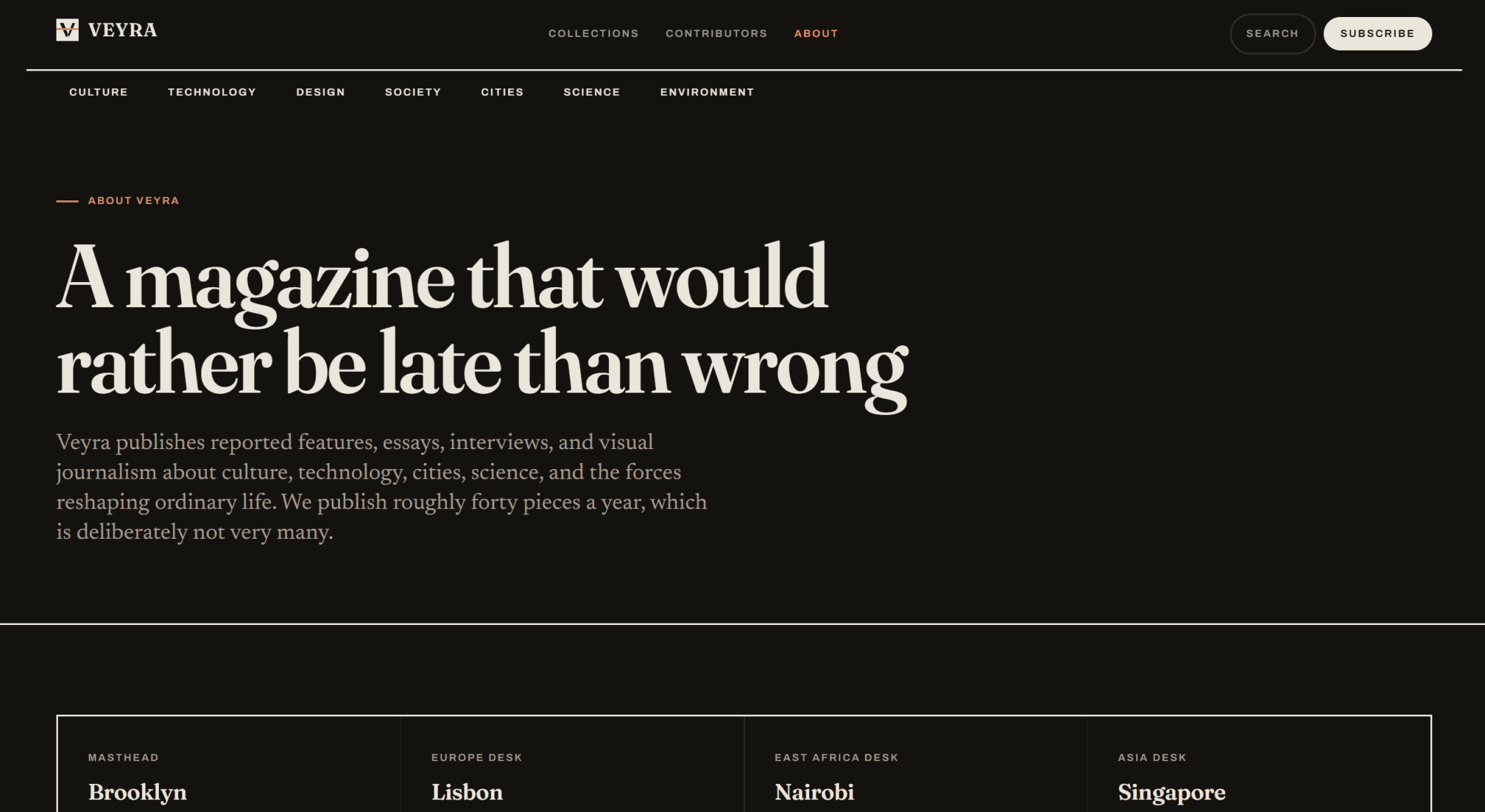
The blueprint relies on static local content, typed via TypeScript, to ensure deterministic builds. By using local content files instead of a database, the architecture remains backend-free while exercising the full scope of editorial features, including collections, section-based desks, and contributor mastheads.
This decision prioritizes maintainability and performance. The tradeoff is that updates to the publication require content file changes and a full rebuild, a conscious choice for a blueprint emphasizing editorial integrity over real-time content streaming.
The image system: Photography and graphic fallbacks
Veyra implements a unified image boundary. Components like `StoryImage` and `ContributorPlate` accept either optimized WebP photography or deterministic SVG cover plates. This treats graphic plates as a first-class citizen of the visual system rather than an error state, allowing content editors to manage visual rhythm without touching layout code.
Demonstration boundaries
Veyra is a fictional publication. Backend-dependent features, such as the newsletter form and site search, are explicitly designed as demonstration-only. The newsletter form validates input locally using Zod but does not store data, while the search index is a serialized local file that excludes article bodies to maintain a minimal client payload.
Lessons and reusability
- Editorial architecture should favor topic and collection-based discovery over pure chronological feeds.
- Image fallback mechanisms are a core part of the design system, not an afterthought.
- SSR/CSR parity is critical for maintaining consistent state in search and reading progress indicators.
- Accessibility semantics must be chosen at the interaction-model level, such as using tablists for manual story stacks instead of auto-advancing carousels.