Executive summary
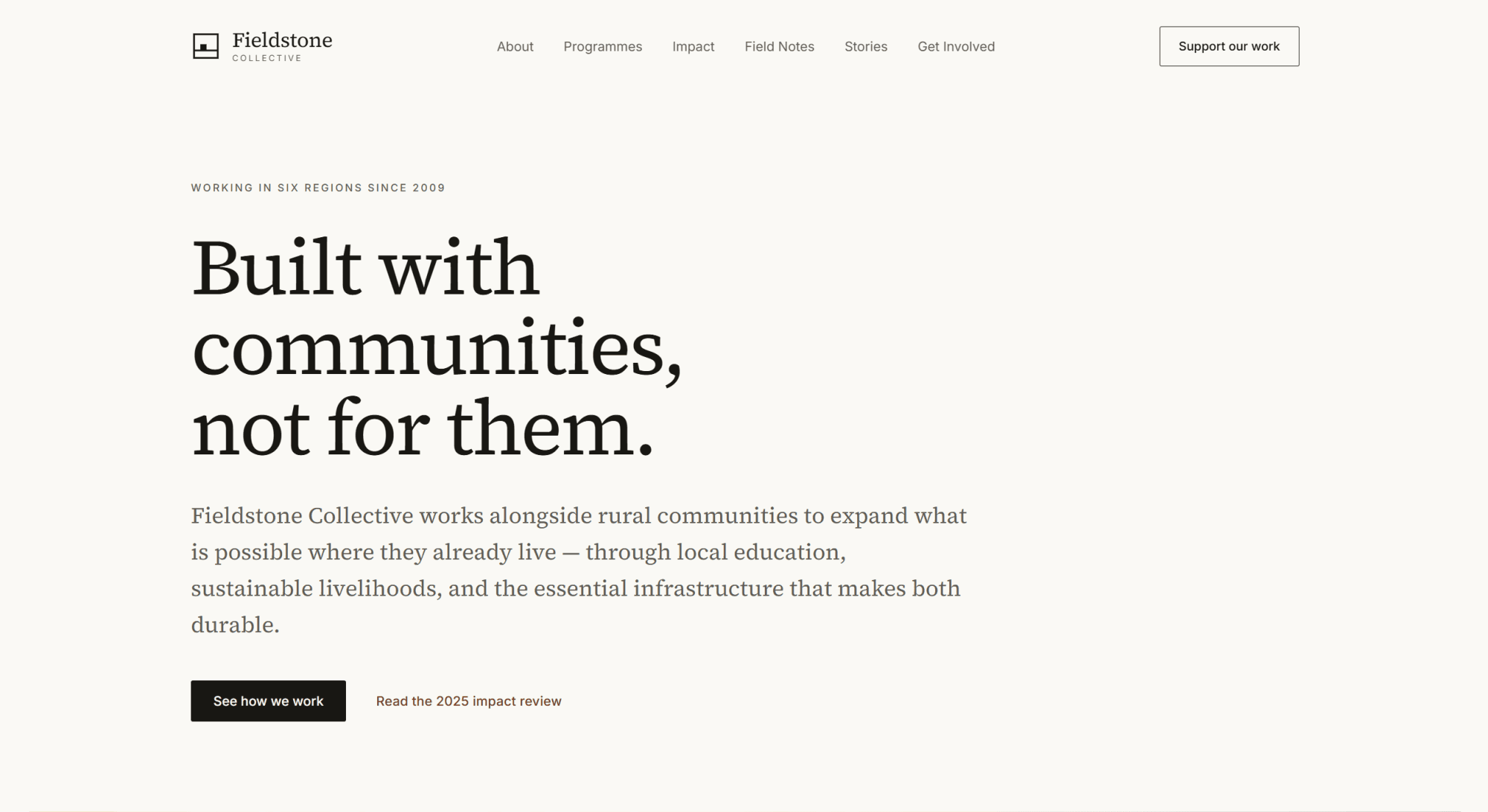
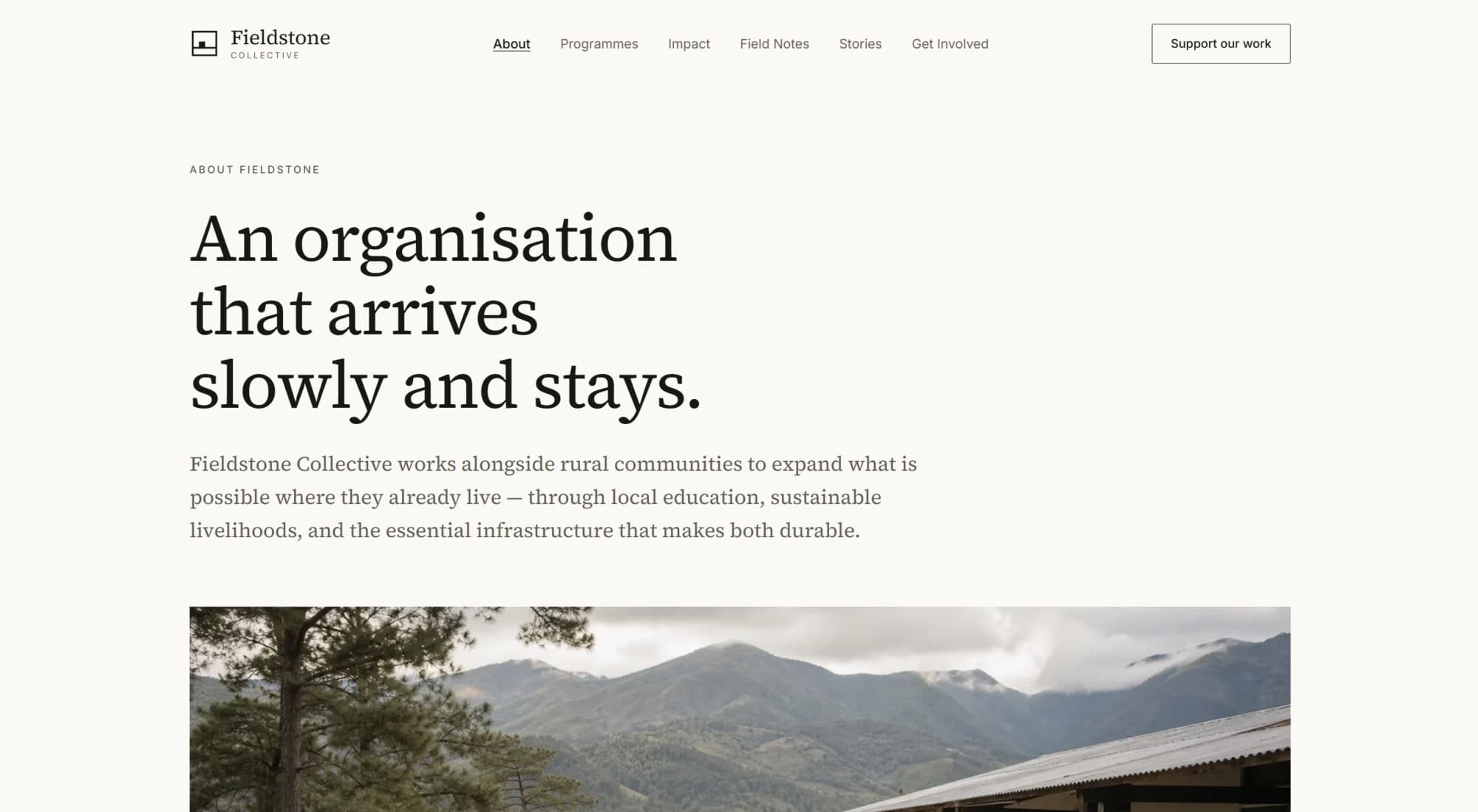
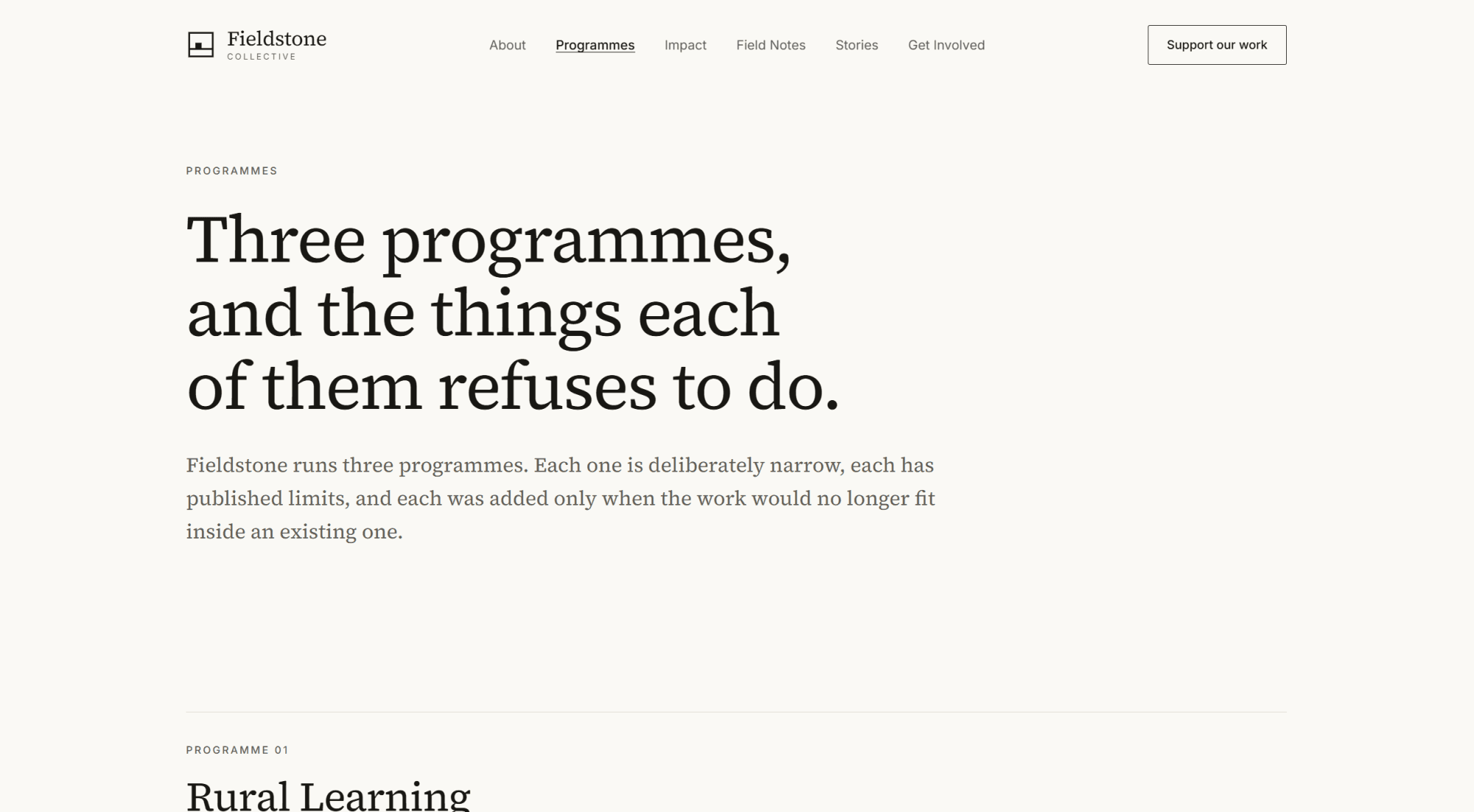
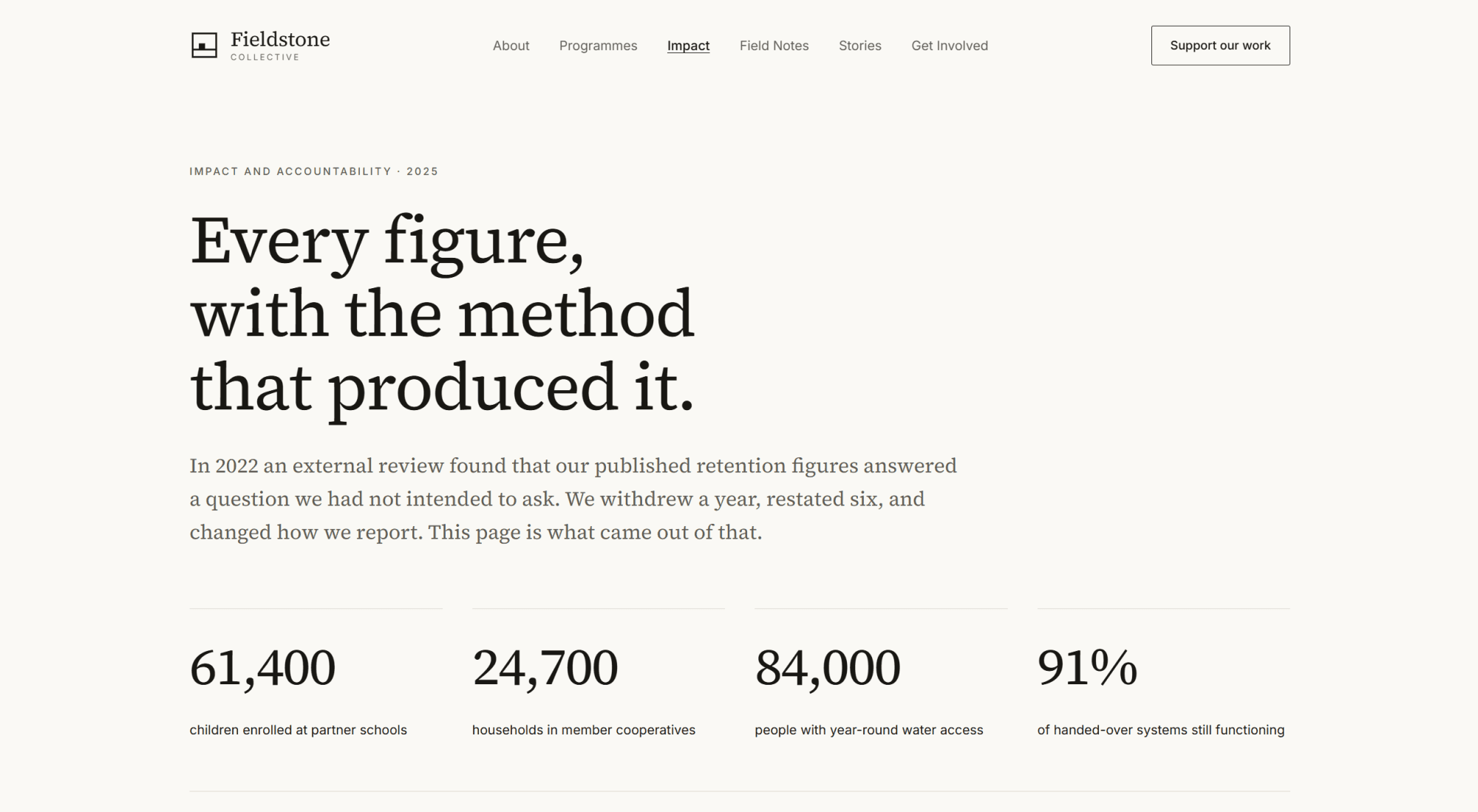
The Nonprofit × Editorial blueprint is a canonical reference implementation for mission-led organisations. It demonstrates how to combine complex information architectures—programmes, impact reporting, field notes, and stories—into a cohesive editorial experience without relying on a CMS or backend database.
Core engineering decisions
The architecture is strictly server-first. Content is defined in typed TypeScript modules and joined by slugs at build time, eliminating request-time data fetching and loading waterfalls. This approach ensures high performance and deterministic output while maintaining a complex, cross-referenced information architecture.
Interactivity is limited to 'client islands'—isolated components that require browser state such as the responsive navigation drawer, search filtering, and scroll-aware masthead transitions. This minimizes hydration overhead and keeps the majority of the site as static HTML.
Editorial design system
The design language focuses on typography as the primary driver of identity. Using Source Serif 4 for prose and Inter for interface elements, the system enforces a clear visual hierarchy. Surface-aware styling uses CSS custom properties to handle dark-mode section transitions automatically, ensuring consistent application of the color palette without manual prop drilling.
Limitations and considerations
The Fieldstone Collective implementation serves as a reference, not a production-ready application for real organisations. It intentionally omits backend services like payment processing or form handling, providing honest, inert alternatives instead. Developers should note that the mobile drawer does not implement a full cyclic focus trap, which may be required for specific accessibility compliance levels in production environments.