Blueprint Travel: The Verdara Journeys reference implementation
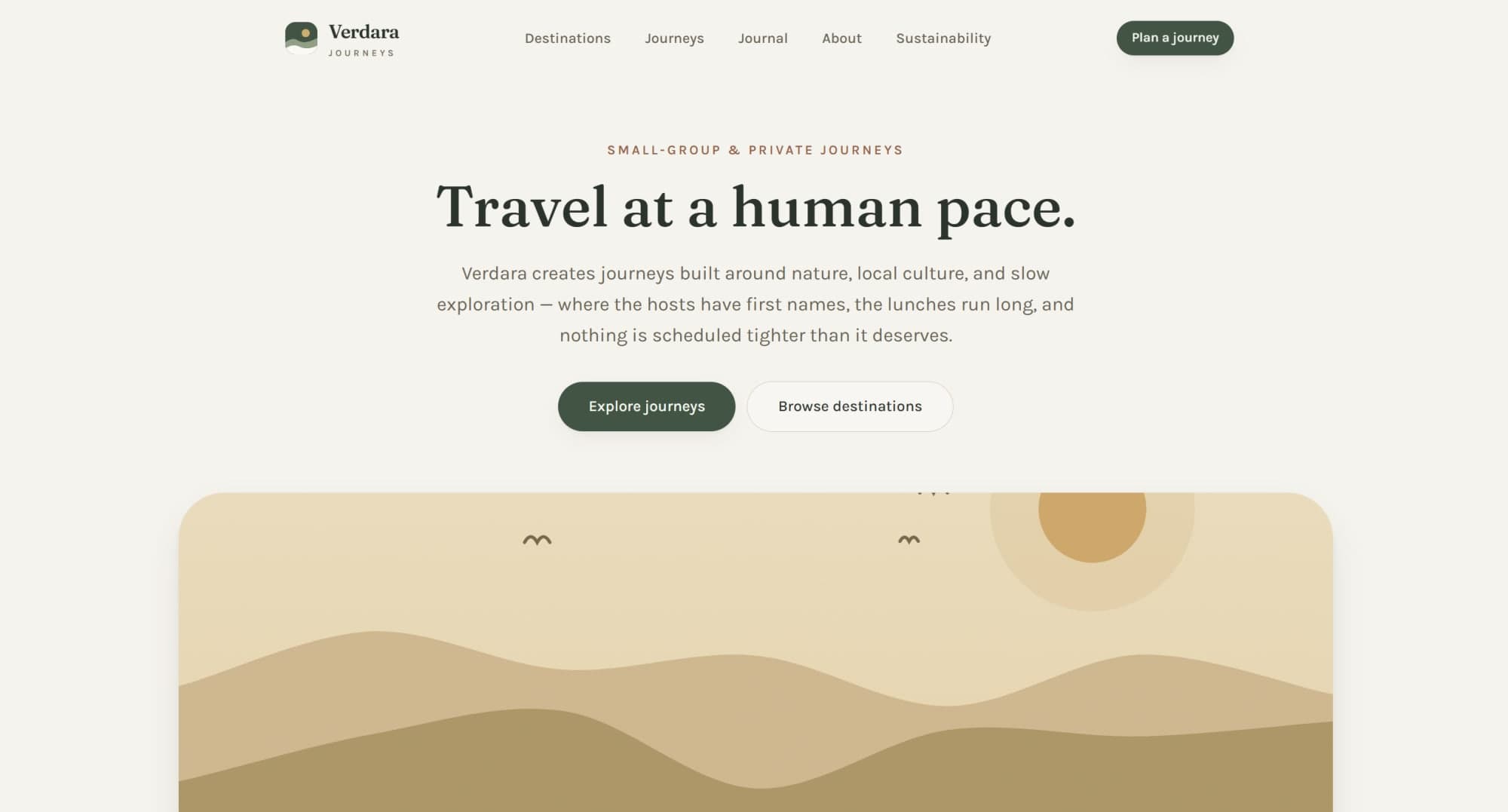
Blueprint Travel (HZ-BP-004), released as Verdara Journeys, serves as the canonical HubZero reference implementation for travel-sector software. It demonstrates how to combine the HubZero Travel architecture with the Organic design language to build a high-fidelity, conversion-oriented marketing site.
The site is an entirely fictional, UK-based small-group travel operator. Rather than relying on generic templates, the implementation provides a complete, cohesive business identity—including GBP pricing, localized content, and structured data—to prove that a site can be both a rigorous engineering demonstration and a believable, trust-building digital product.
Technical foundation and rendering strategy
The stack is built on Next.js 16 (App Router), React 19, TypeScript, and Tailwind CSS v4. The implementation is static-first, using generateStaticParams to prerender all destination and journey detail pages at build time. This ensures maximum performance and SEO reach without the complexity of a database or CMS.
Data is managed as strictly-typed TypeScript arrays in src/content/*.ts. This approach allows for full type safety across the application and simplifies the content-to-page mapping. The architecture strictly separates concerns into four tiers: layout primitives, shared mechanisms, site-specific chrome, and travel-domain components.
Notable engineering decisions
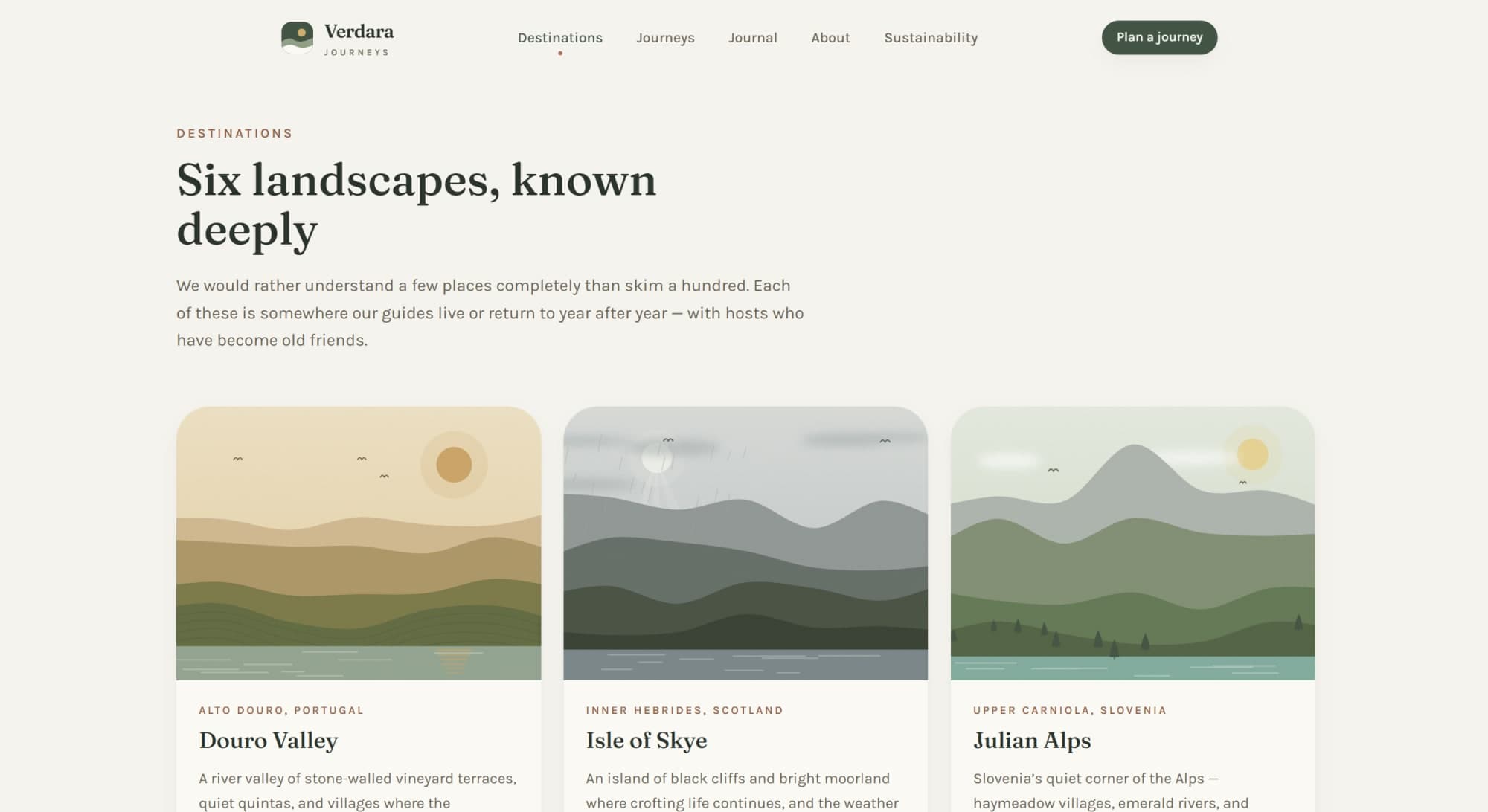
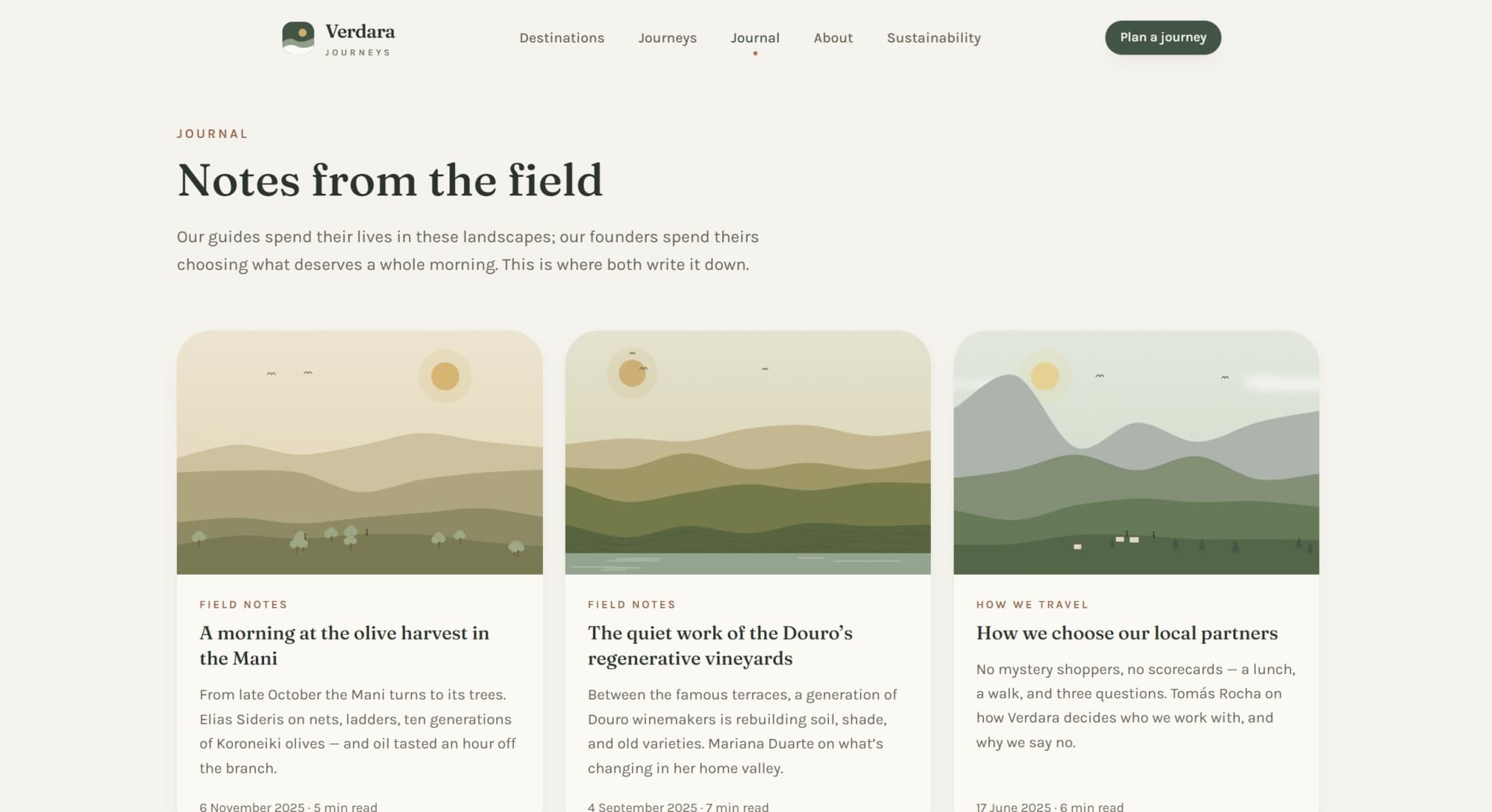
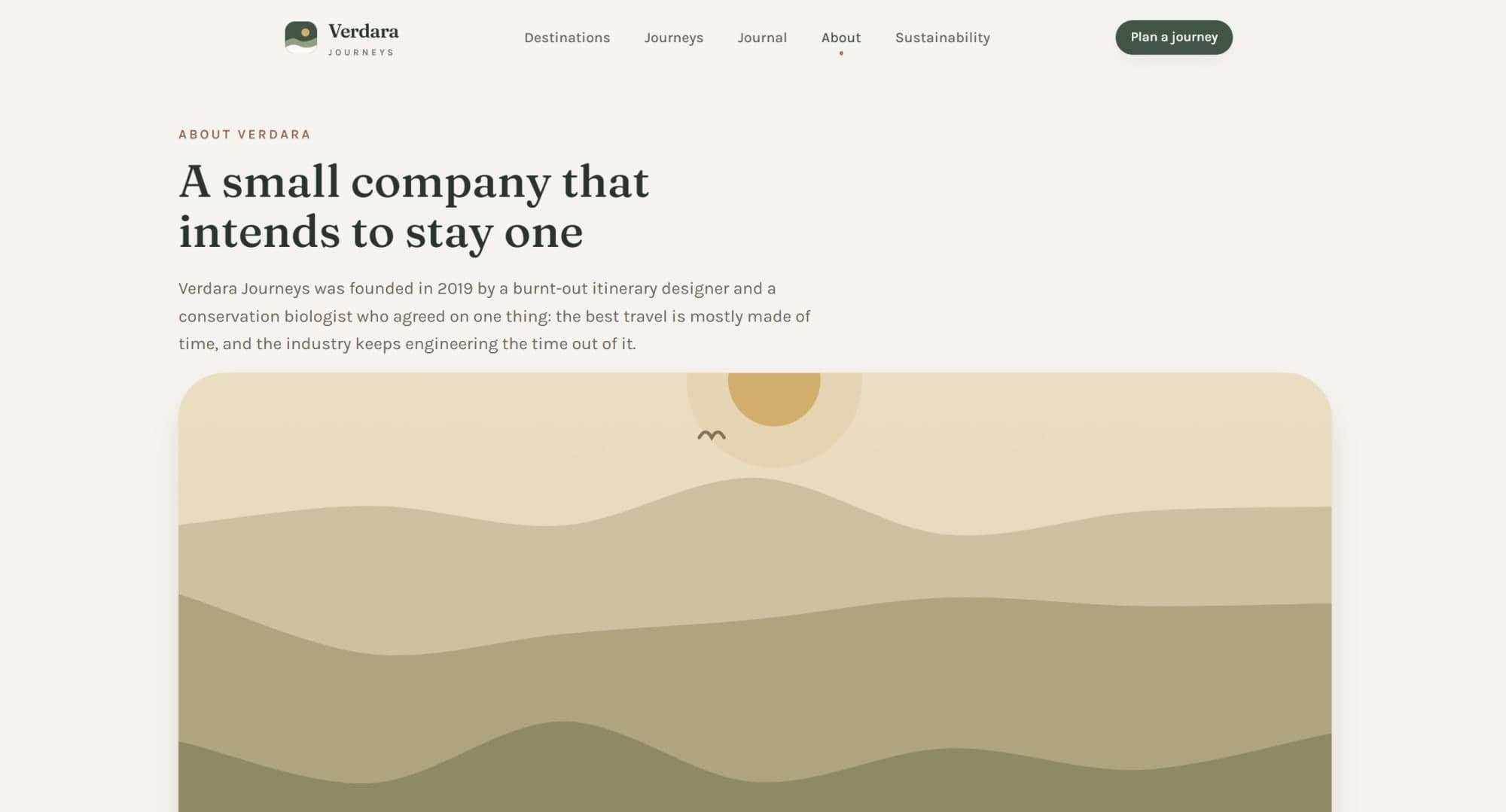
- SVG-only imagery: To maintain honesty in a fictional brand, the site uses original, programmatically generated SVG illustrations rather than stock photography, avoiding the implication of fake real people.
- Reveal mechanism: Scroll-triggered animations are driven by a shared Reveal component that only manages data-state. The actual motion is defined in CSS, decoupling the trigger from the visual language.
- Mailto handoff: The enquiry funnel replaces fake backend submission with a robust, client-side mailto handoff, keeping the user in control and avoiding unreliable auto-navigation in browsers like Chrome.
- JSON-LD builder functions: Structured data is co-located with the entity types, keeping SEO logic typed and maintainable rather than scattering inline scripts.
Reusable architectural patterns
The site implements a title-template contract within its metadata factory, ensuring consistent site-name appending while providing explicit fields for social media titles. Additionally, the 'content-as-data' pattern provides a blueprint for future projects to implement complex entity relationships without the overhead of a CMS.
Conclusion
Verdara Journeys proves that a static-first architecture can support a complex, content-heavy marketing site while maintaining high performance and accessibility. Future implementations can adopt the ItineraryTrail component, the Reveal scroll-animation pattern, and the enquiry-funnel handoff as battle-tested foundations.