Engineering Profile / EP-005
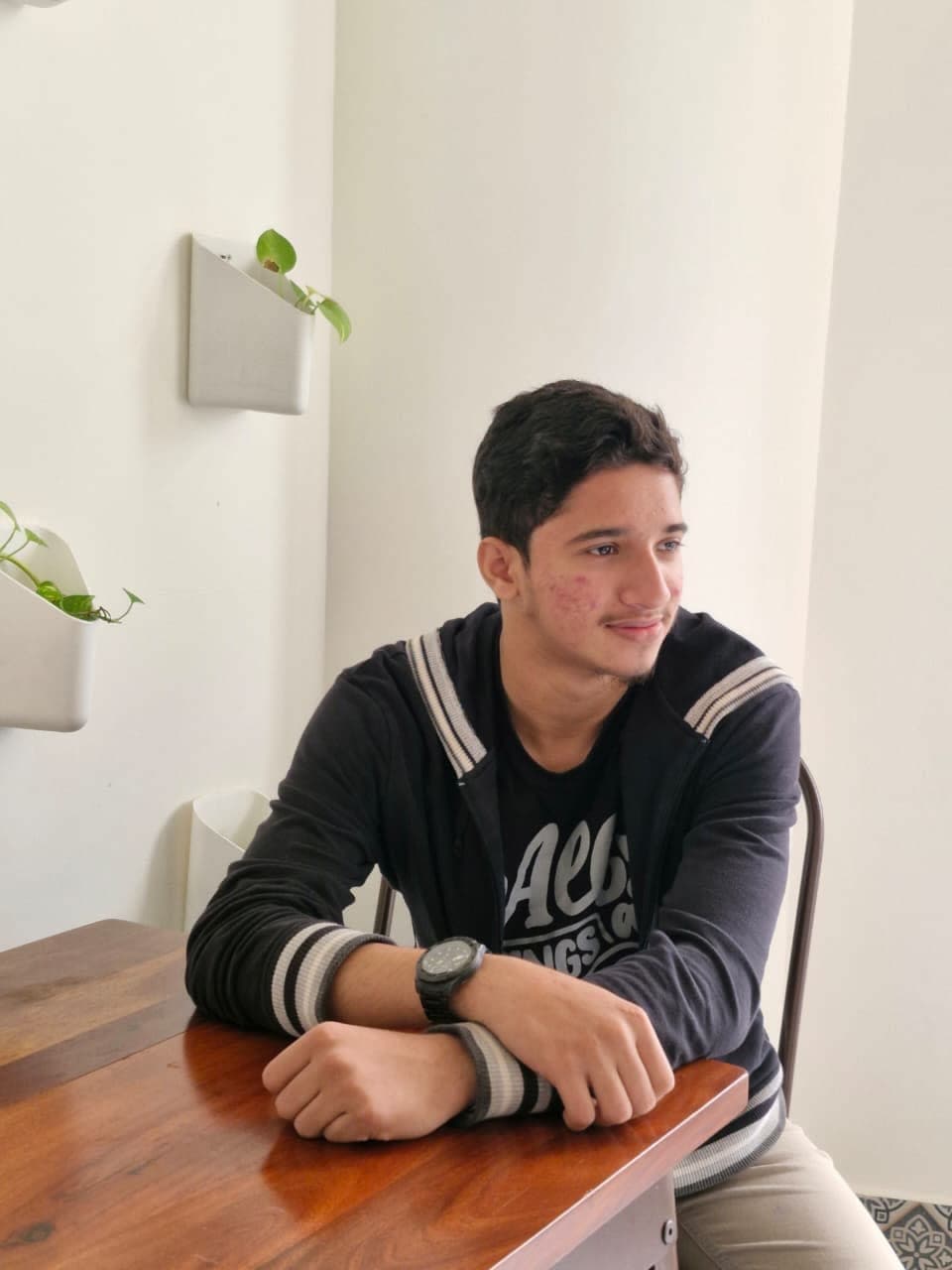
Salsabeel Kobattey
Vice President of Hardware & Chief Financial Officer
Salsabeel Kobattey is an electronics engineer whose passion lies in understanding technology at its most fundamental level. His interests span embedded systems, robotics, VLSI, FPGA design, and computer architecture, with a particular focus on building efficient, reliable hardware that solves real-world problems.
Routing / component pads
Precision is the constraint.
| Pad | Technology |
|---|---|
| 01 | Embedded Systems |
| 02 | Robotics |
| 03 | VLSI |
| 04 | FPGA Design |
| 05 | Chip Architecture |
| 06 | Infrastructure |
Engineering position / current practice
Understand before you build.
I believe engineering is about understanding problems before designing solutions. Rather than searching for the most complex approach, I aim to build systems that are efficient, reliable, practical, and easy to maintain. Complexity belongs in the engineering process, not in the experience of the people who use what we build.
- Understanding the problem is more important than building the solution quickly.
- Simplifying complexity isn’t reducing effort — it’s evidence that you’ve truly understood the problem.
- Knowledge is my foundation, curiosity is my compass, and continuous growth is my journey.
Current exploration
VLSI and FPGA design, and understanding how modern processors and embedded systems are designed from the ground up.
Areas of expertise
- Embedded Systems
- Robotics
- Infrastructure
- VLSI
- FPGA Design
- Chip Architecture
Current interests
- VLSI Design
- FPGA Development
- Digital Hardware Design
- Modern Chip Architectures
Evidence / demonstrated contribution
Follow the routing into the work.
Every connection below is explicit in the public record. Internal creator metadata is never treated as contribution credit.
Related Labs
Introduction / engineering context
Position and practice
Engineering philosophy
I believe engineering is about understanding problems before designing solutions.
Rather than searching for the most complex approach, I aim to build systems that are efficient, reliable, practical, and easy to maintain. Complexity belongs in the engineering process—not in the experience of the people who use what we build.
To me, simplifying a difficult problem is evidence of understanding it deeply.
Journey
I've always been curious about how things work beneath the surface. Instead of simply accepting that technology functions, I naturally want to understand why it works. That curiosity eventually led me toward electronics, embedded systems, and hardware engineering, where every component contributes to a larger system.
As my interests expanded, I became increasingly fascinated by semiconductor design and the foundations of modern computing.
Interview / specific judgement
Questions from the work
You often mention simplifying complex problems. Where does that mindset come from?
I've always been drawn to understanding how things work rather than simply accepting that they do.
I naturally break complex systems into smaller, connected pieces until they make sense. Over time, that became the way I approach almost every engineering problem.
To me, simplifying complexity isn't reducing effort—it's evidence that you've truly understood the problem.
What excites you most about working close to the hardware?
One of my personal goals has always been to explore every major area of engineering.
Hardware excites me because it transforms ideas into physical systems that perform real work. Designing hardware requires thinking about timing, efficiency, power consumption, and how every component interacts at a fundamental level.
VLSI and FPGA design are especially fascinating because they reveal how computing actually works beneath the surface.
Your IoT LED controller remains your favorite project. Why?
It was one of the first projects where I gave everything I had.
I spent countless hours learning new concepts, solving bugs, experimenting, and improving the system until everything finally worked together. The process itself became more rewarding than the final product.
Can you share an example where understanding the problem first led to a better outcome?
During one of our mini projects, my teammates wanted to begin building the hardware immediately.
Instead, I suggested we spend more time understanding every aspect of the problem before starting implementation. That extra planning uncovered several design flaws early, saving significant time, money, and unnecessary work later.
What keeps you motivated when working on difficult engineering problems?
Curiosity is my biggest source of motivation.
I genuinely enjoy learning and improving with every challenge. But I also rely on structured methods instead of motivation alone. I break large problems into very small tasks, write everything down, and track progress carefully.
If there were no limitations, what hardware would you love to help build?
I'd love to contribute to next-generation processors and embedded systems that deliver higher performance while consuming less power.
I'm particularly interested in hardware for artificial intelligence, edge computing, and space technology—areas where thoughtful engineering can have a meaningful impact on the future.
Have your interests outside engineering influenced the way you solve problems?
Absolutely. Reading has taught me patience and curiosity, encouraging me to understand ideas deeply rather than searching for quick answers.
History and geography remind me that engineering exists within a much larger context. They encourage me to learn from existing solutions, understand how technology evolves, and approach every problem with perspective instead of assumptions.
Principles / concise record
Working positions
Knowledge is my foundation, curiosity is my compass, and continuous growth is my journey.
Timeline / meaningful change
Changes in practice
Developed an early passion for electronics and hardware systems.
Built an IoT LED Controller that solidified an interest in embedded engineering.
Expanded into robotics, infrastructure, and semiconductor technologies.
Began exploring VLSI and FPGA design.
Became Co-Founder, Vice President of Hardware, and Chief Financial Officer at HubZero.
Continues researching next-generation hardware and chip architectures.