Engineering Profile / EP-004
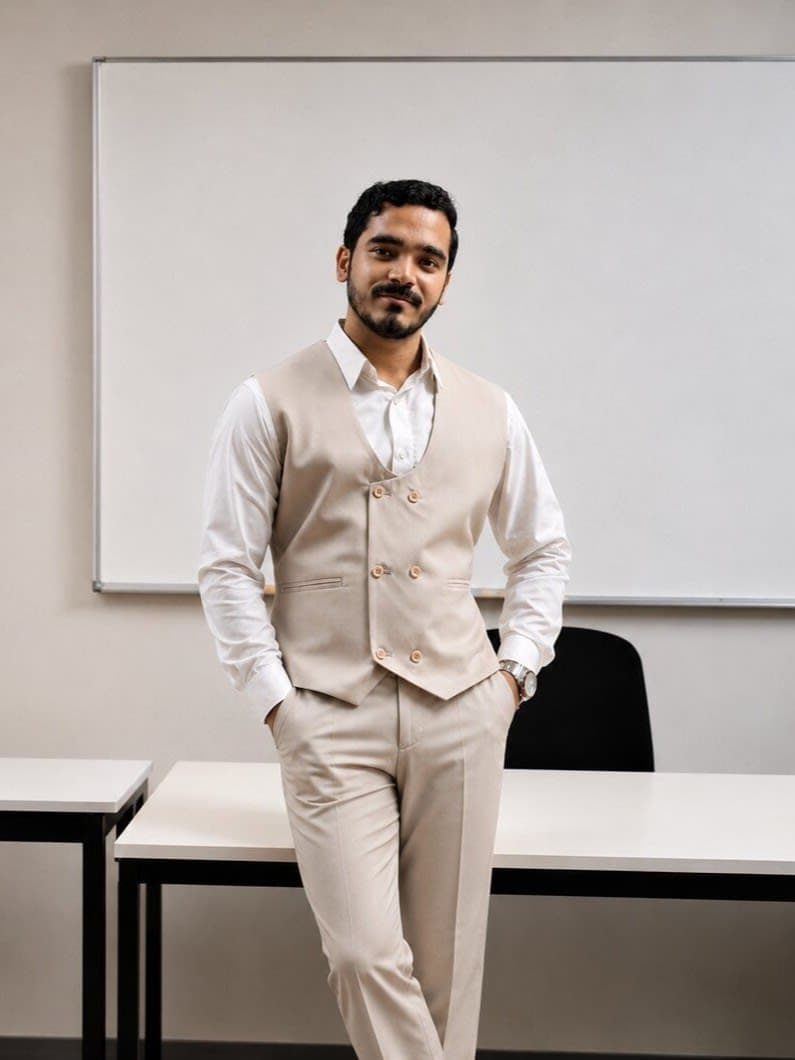
Syed Mohammed Sultan
Chief Marketing Officer
Syed Mohammed Sultan is a software engineer with a strong interest in full-stack development, artificial intelligence, and building software that solves practical business problems. His work focuses on creating reliable, maintainable applications that simplify workflows, improve decision-making, and help people accomplish more with technology.
Engineering position / how it's communicated
Clarity is the deliverable.
I believe software should remain simple long after it's finished. That means writing clean, reusable code, designing maintainable architecture, and avoiding unnecessary complexity whenever possible. Good engineering isn't measured by how complicated a system looks, it is measured by how easily people can understand, maintain, and extend it years later.
- Build simple, maintainable, and scalable systems that solve real problems.
- Technology should exist to solve meaningful problems, not simply because it is interesting to build.
Current exploration
Spring Boot, neural networks, and combining reliable backend systems with AI features that provide real value.
Areas of expertise
- Artificial Intelligence
- Large Language Models
- Developer Tools
- Full-Stack Development
- Backend Systems
- Java
- Spring Boot
- Spring Framework
- Neural Networks
- SQL & Databases
Current interests
- Spring Boot
- Spring Framework
- Neural Networks
- Artificial Intelligence
- JavaScript
Technology path
Evidence / demonstrated contribution
Follow the record into the work.
Every connection below is explicit in the public record. Internal creator metadata is never treated as contribution credit.
Related Builds
Introduction / engineering context
Position and practice
Engineering philosophy
I believe software should remain simple long after it's finished.
That means writing clean, reusable code, designing maintainable architecture, and avoiding unnecessary complexity whenever possible.
Good engineering isn't measured by how complicated a system looks—it is measured by how easily people can understand, maintain, and extend it years later. Whenever I design software, I try to prioritize clarity, reliability, scalability, and the needs of the people who will actually use it.
Journey
My interest in software engineering grew from wanting to build systems that solve real problems rather than simply demonstrating technical concepts.
Over time I became interested in artificial intelligence, backend systems, databases, and full-stack web development because together they make it possible to build complete applications that businesses and individuals can rely on every day.
That curiosity eventually led me toward projects involving AI, natural language processing, and developer tooling, while continuing to explore new technologies through personal experimentation.
Interview / specific judgement
Questions from the work
QueryCraft introduced you to large language models and AI systems. What did building it teach you that textbooks couldn’t?
Building QueryCraft taught me that making AI work in a real project is very different from learning about it in books. Although I didn't have the lead role on the project, the biggest challenge wasn't the AI itself—it was making sure the output was actually useful, handling different situations, and making every part of the system work together properly.
You often mention building simple, maintainable software. Can you describe a time when choosing a simpler solution turned out to be the better engineering decision?
While building my projects, I often wanted to add more features, but I deliberately kept the design simple so I wouldn't confuse myself when returning later for updates.
That decision made the software much easier to understand, debug, maintain, and extend without getting lost in unnecessary complexity.
You enjoy solving business problems through software rather than building technology for its own sake. Why does that approach resonate with you?
I like building software that people can actually use.
If a project saves time, makes work easier, or solves a real problem, then I feel the effort invested in building it was worthwhile.
You're currently exploring Spring Boot, neural networks, and JavaScript. What kinds of systems do you hope to build?
I want to build complete web applications that combine a polished frontend, a reliable backend, and AI features that are genuinely useful instead of adding AI simply because it's popular.
You mention creating parody websites and experimenting with random ideas. What do those side projects teach you?
They give me the freedom to experiment without worrying about perfection.
If something doesn't work, I still learn something new, and the process itself remains enjoyable.
As HubZero evolves into a product company, what kind of products would you most like to see it known for?
I want HubZero to build software that businesses trust and use every day.
Products should solve real problems, remain easy to use, and genuinely help people work better. Just as importantly, I hope our team continues working together with strong cooperation and mutual respect as the company grows.
Principles / concise record
Working positions
The best way to predict the future is to invent it.
— Alan Kay
Timeline / meaningful change
Changes in practice
Began exploring software engineering through Java, Python, SQL, and web development.
Developed the Language Translator project, introducing machine learning concepts through TensorFlow.
Expanded interests into AI systems, developer tools, and full-stack development.
Contributed to QueryCraft as part of a collaborative engineering team, gaining practical experience with large language models.
Became Co-Founder and Chief Marketing Officer of HubZero.
Continues exploring backend architecture, artificial intelligence, and modern web technologies.